

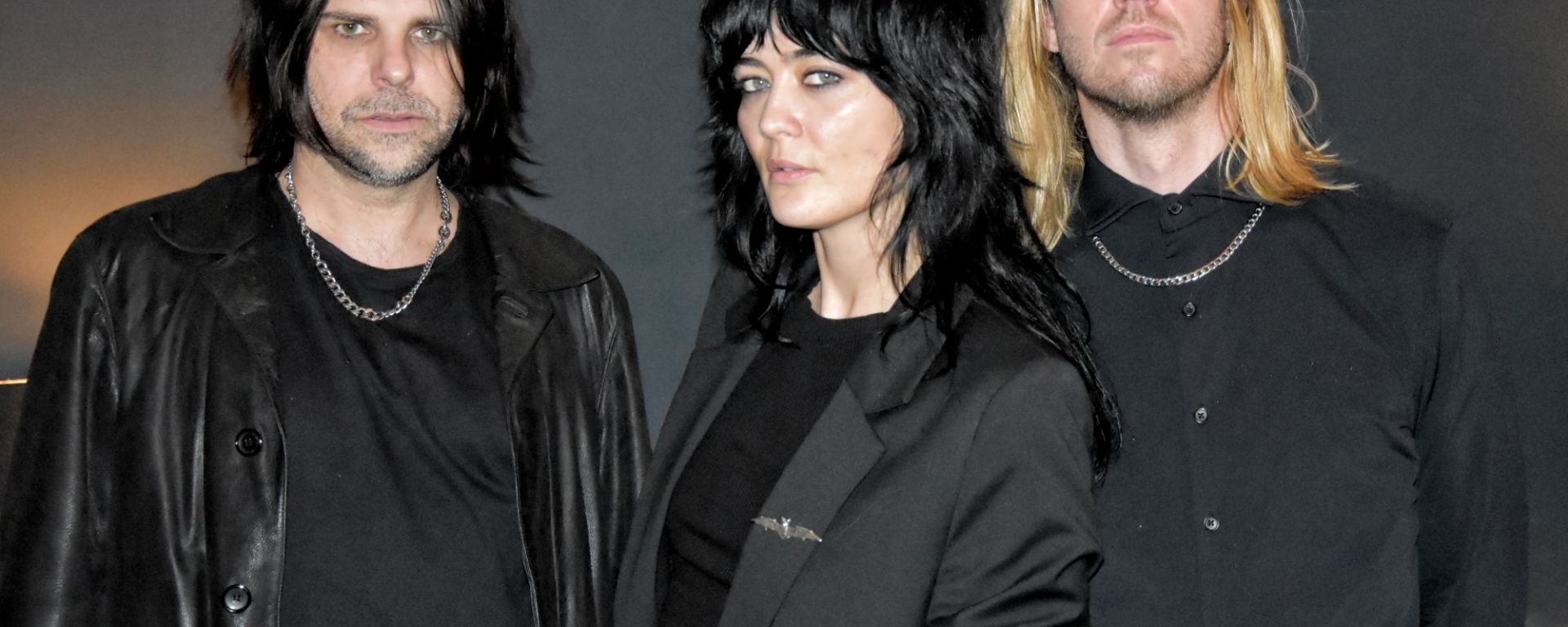
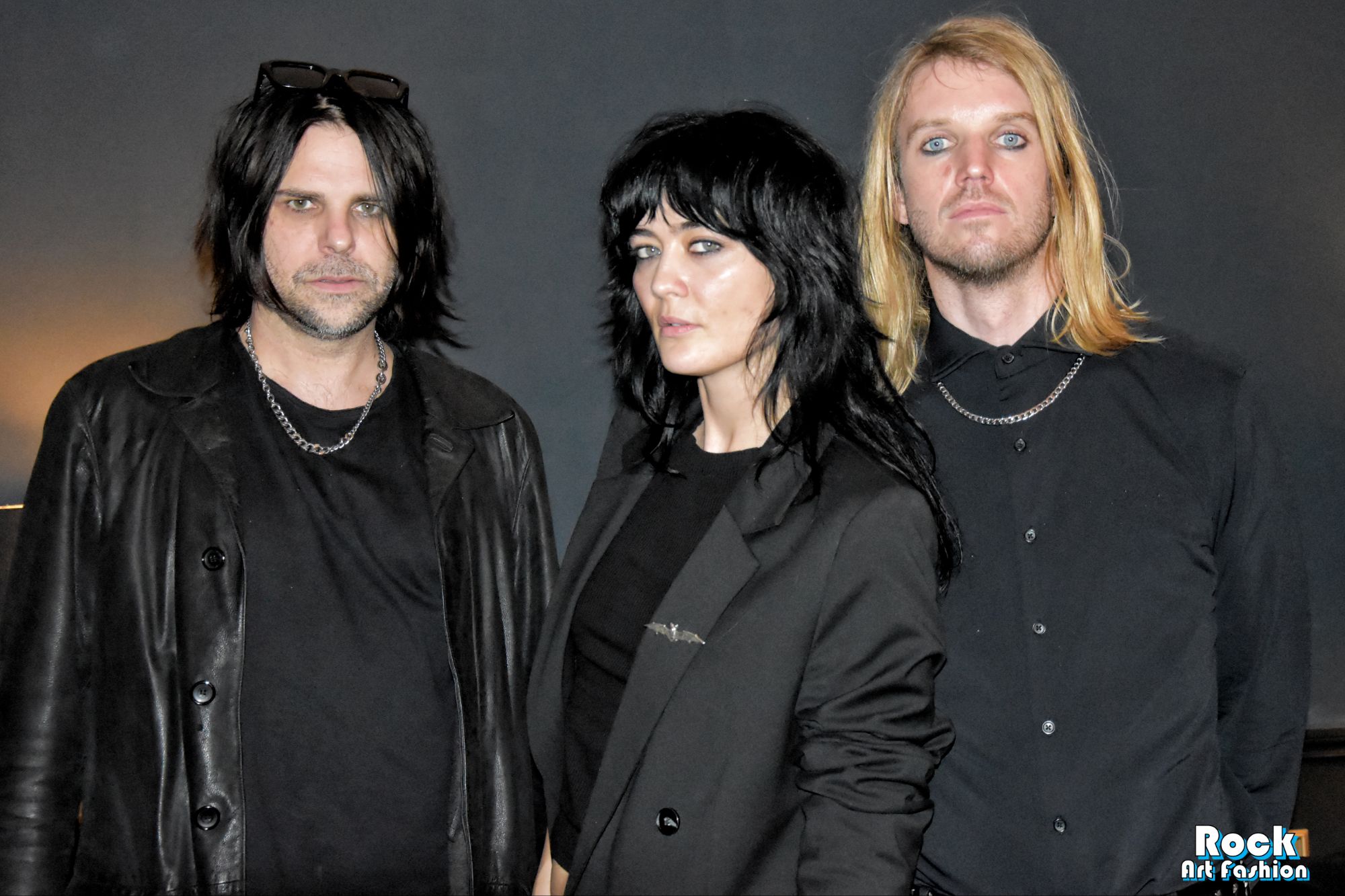
SAINT AGNES s’impose comme l’un des groupes rock les plus électrisants du moment, et leur nouvel album au titre prophétique, Your God Fearing Days Are About To Begin, ne se contente pas d’enfoncer le clou : il frappe le coup de grâce.
Après le féroce et vampirique Bloodsuckers (2023), le trio londonien livre ici son disque le plus abouti : personnel, politique, viscéral, élégant.
Musicalement, SAINT AGNES élargit son champ d’assaut. Leur punk rock sauvage et abrasif se fond dans un électro industriel massif digne de Nine Inch Nails, traversé de mélodies pop, de synthés arachnéens et de fulgurances chaotiques où rage et vulnérabilité se heurtent de plein fouet. Un groove sombre, rampant, qui finit toujours par exploser. Une musique façonnée pour la scène, les corps, et ces abysses intérieurs où la danse devient combustion.
Le spectre de notre époque tourmentée plane sur les dix compositions : un monde reconnaissable, ses dérives, ses monstres sans masque. L’album frappe juste, sans jamais tomber dans le sermon.
Au centre on retrouve la voix brute, craquante, rugissante de Kitty A. Austen, qui tranche comme une lame vive. À ses côtés, les riffs colossaux de Jon James Tufnell et la frappe implacable d’Andy Head bâtissent un mur de son tendu, nerveux, incandescent.
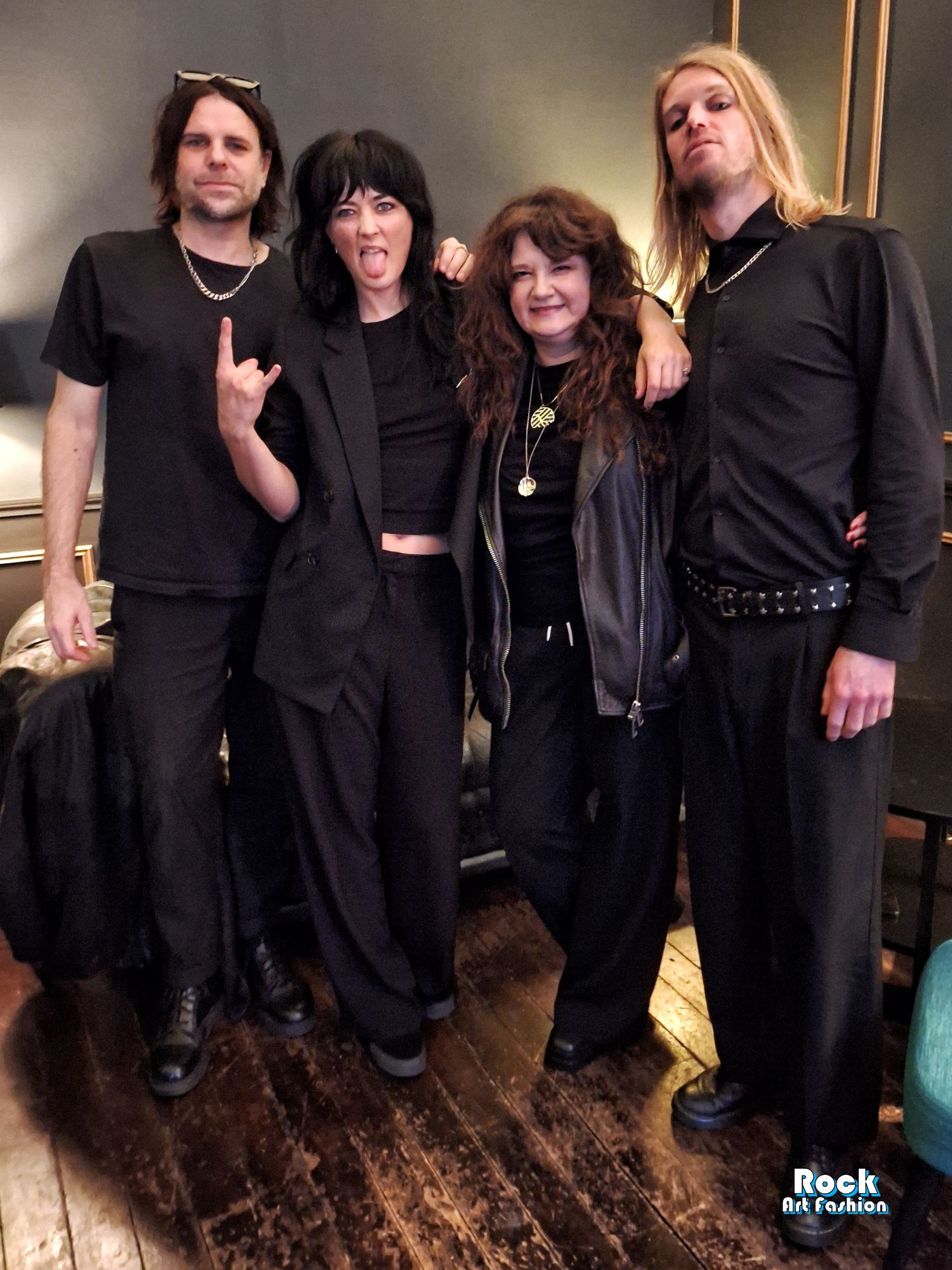
J’ai eu le plaisir de rencontrer les trois membres du groupe, qui nous ont parlé sans filtre de la création de l’album, des thèmes qui l’habitent, de l’intensité de leurs shows et de leur nouveau fashion style, totalement noir. Plongez dans l’interview — et dans un album exceptionnel !
Hello Saint Agnes, trois ans après Bloodsuckers, vous êtes de retour avec un nouvel album. Qu’est‑ce qui le définit, et comment s’est passée la création cette fois‑ci ?
Kitty : Bloodsuckers raconte une période extrêmement difficile de ma vie. Ma mère est décédée brutalement, et cet album a été dur à réaliser. À la fin, je me suis vraiment demandé : est‑ce que j’ai encore envie de continuer ?
Ça a été tellement dur, presque traumatisant. J’ai vraiment dû réapprendre à aimer écrire et faire de la musique. Pour ce nouvel album, on est donc arrivés avec l’idée de ne s’imposer aucune règle. Personne ne nous demandait de faire un disque, rien ne nous y obligeait. On était libres pour faire ce qu’on voulait. Alors, on s’est lancés avec un esprit ouvert, sans pression, en voulant que le processus soit agréable — pas une torture.
Jon : Malheureusement, on est sorti du process classique typiquement Saint Agnes, et là on a eu un problème. Avec Bloodsuckers, tout était autoproduit, et on pensait que pour retomber amoureux de la musique, il fallait peut‑être lâcher un peu la pression technique et redevenir simplement des artistes.
On a donc commencé à travailler avec un producteur. On a parlé à plusieurs personnes, mais c’est lui qui semblait le plus investi dans ce qu’on faisait. On s’est dit : “OK, allons‑y, faisons l’album avec toi.”
Mais assez vite, on a compris que notre vision de l’intensité du travail ne correspondait pas du tout à la sienne. Il passait trop de temps sur son téléphone, à discuter avec son manager, au lieu d’être concentré sur nous et sur le disque.
On a dû faire une pause, mais cette courte période avec lui nous a forcés à réfléchir. On était entrés dans le process un peu à l’aveugle, sans vraie direction, et d’un coup on s’est dit : “Maintenant, on sait exactement ce qu’on veut.” On a tout arrêté, repris le contrôle et tout refait nous‑mêmes, avec une énergie complètement renouvelée. Et même si je ne le respecte pas vraiment humainement, j’ai quand même appris de lui deux‑trois trucs techniques qui nous ont été très utiles.
On a donc préparé l’album qu’on voulait vraiment faire, on l’avait mixé et tout, mais on sentait qu’il y avait encore moyen de l’amener un cran plus haut.
On en a parlé à notre label, qui nous a envoyé à plusieurs ingénieurs de mixage. Et celui dont le travail nous a le plus convaincus, c’est Jim Pinder — qui bosse avec Bring Me The Horizon ou Sleep Token, des groupes qui sont certes très éloignés de nous mais c’est justement lui qui a le moins touché à notre mix. En fait, il n’a rien changé, juste apporté plus de couleur, plus de lumière, plus d’ampleur. Il respectait totalement ce qu’on avait fait. C’est pour ça qu’on l’a choisi pour l’album.
Le projet a commencé dans un endroit vraiment sombre, mais il s’est terminé dans quelque chose de vraiment positif. Malgré les obstacles, ce parcours nous a permis de créer un album bien meilleur que tout ce qu’on aurait pu espérer si nous avions poursuivi notre processus initial. C’est pour ça qu’il y a cette lueur d’espoir dans la musique : elle reflète exactement ce qu’on a traversé.
Le titre de l’album marque les esprits « Your God Fearing Days Are About To Begin » (Tes jours de peur divine ne font que commencer). Pourriez-vous nous l’expliquer ?
Kitty : On aime créer notre propre bulle, notre petit monde à nous. C’est d’ailleurs pour ça qu’on est dans un groupe : on est tous un peu timides, un peu maladroits, toujours légèrement décalés. Le groupe, c’est notre refuge, notre foyer, un endroit où on se sent en sécurité. On crée dans cette bulle, loin des influences extérieures.
Mais pendant l’écriture de l’album, le monde autour de nous s’est mis à s’embraser : la montée de l’extrême droite, le retour d’un discours fasciste, une impression de chaos permanent.
Cette ombre planait sur tout ce qu’on faisait, et forcément, elle s’est infiltrée dans le processus créatif. Comment aurait‑il pu en être autrement ?
Jon : L’extrême droite utilise souvent la religion pour masquer son autoritarisme, comme si vos jours de “peur de Dieu” allaient resurgir. Ils s’en servent pour adoucir le choc de ce qu’ils veulent réellement imposer. Alors forcément, on pense à des œuvres comme The Handmaid’s Tale, ou même à 1984. Il y a des moments dans la fiction et dans l’Histoire où l’on sent qu’on arrive à un point de bascule… et c’est un peu l’impression qu’on avait. Aucune chanson ne parle directement de cette situation, mais ce climat planait sur tout.
Quels sont les thèmes et les inspirations du disque ?
Kitty : Toutes les chansons sont simplement mes réflexions sur le monde en ce moment : les amitiés, les relations, la société, la politique… Il n’y a pas un thème global. Le fil conducteur, c’est moi, l’endroit où j’en suis aujourd’hui. Et puis il ya cette énergie de rébellion toujours présente dans toute notre musique, ce besoin de se libérer et de se dresser contre… je ne sais même pas quoi exactement.
Jon : Contre des attentes…
Kitty : Oui, peut-être des attentes, mais comme je l’ai dit, on s’est toujours senti un peu écartées comme individus, donc ce fait est toujours présente dans la musique.
Il y a une chanson sur l’album, The Ghost dans laquelle je parle du fait de se sentir totalement aliéné et d’être inaudible, et Jon a dit qu’il m’avait entendue…
Jon : Kitty m’avait raconté qu’il lui arrivait de parler dans un groupe sans que personne ne l’entende, au point de se demander : “Mais je suis un putain de fantôme ou quoi ? Est‑ce que j’existe vraiment ?” Cette phrase m’a marqué. Elle a résonné en moi, et j’y ai vu une idée à creuser. J’ai donc écrit quelques lignes pour planter la graine.
Quand Kitty les a entendues — et après que je l’ai un peu encouragée en lui disant que je sentais qu’il y avait quelque chose à poursuivre — elle a tout de suite compris la direction. Elle a écrit le reste des paroles. Au départ, il n’y avait que deux ou trois lignes inspirées de ce qu’elle m’avait confié. Je les ai mises dans une chanson, je lui ai renvoyé le texte, et on l’a terminée ensemble. Il y a quelque chose de très beau dans le fait qu’elle se sente parfois inaudible… et que ce soit précisément ce qui m’ait permis de l’entendre, puis d’écrire une chanson qu’elle a finalement achevée par elle‑même. C’est une boucle parfaite, et j’en suis vraiment fier.
Il y a une chanson puissante, explosive, personnelle dans laquelle Kitty, on ressent que tu es particulièrement en colère contre quelqu’un : Everything you Denied.
Kitty : La chanson parle bien d’une personne en particulier, mais je préfère ne pas entrer dans les détails. Ce qui compte, c’est cette idée de défier les attentes : les gens essaient toujours de te mettre dans une case, alors que, franchement, comment pourraient‑ils ? Ils ne savent même pas vraiment qui tu es. C’est ce refus d’être enfermé qui traverse le morceau, et je pense que c’est quelque chose d’assez universel. On l’a tous ressenti.
Jon : Oui, quand quelqu’un nie ton existence ou ta réalité, refuse de te voir tel que tu es — et le fait volontairement — ça te fait vraiment douter de toi. Et c’était évident que la musique devait refléter cette intensité‑là.
Andy : C’est l’un des premiers morceaux qu’on a vraiment joués ensemble en studio, en mode groupe. Une bonne partie de l’album s’est construite avec plus d’allers‑retours via l’ordinateur. Mais celui‑là, c’était une vraie chanson de rock jouée en live.
Kitty : Je pense que c’est une manière très saine de gérer ce genre de situations. Tu peux t’énerver, confronter la personne, mais au fond, les gens ne changent presque jamais d’avis. Tu ne peux rien faire pour ça. Alors écrire une chanson, monter sur scène, hurler ces mots avec mille personnes qui ressentent la même chose… c’est une façon puissante et saine d’évacuer cette émotion. Sinon, tu finis juste par te cogner la tête contre les murs. Et franchement, ça marche : ça te débarrasse de ce mauvais sentiment.
Vos shows sont ultra intenses. Comment vous vous préparez, mentalement et physiquement, pour tenir la charge ?
Jon : Niveau physique, on est catastrophiques : pas d’échauffement, pas d’étirements. On fonce, point. On se laisse porter par l’émotion. Et on est tous des control freaks — mais pour moi c’est normal : si c’est ta musique, tu dois t’en soucier.
Jouer en live, c’est le moyen de faire taire les voix dans nos têtes, d’arrêter de penser et d’être pleinement dans l’instant. C’est un état mental difficile à atteindre. La seule façon d’y arriver, c’est de s’y jeter physiquement et émotionnellement, en espérant que la vague nous porte. Et quand ça arrive, c’est euphorique. Quand on n’y parvient pas, on a vraiment l’impression d’avoir raté le concert.
On cherche toujours cet état, et il est très difficile à atteindre — et tous les musiciens à qui on en parle ressentent la même chose. C’est ce moment où tu coupes ton cerveau et tu es totalement présent.
Du coup, on ne fait presque aucune préparation mentale ou physique. Ce qu’on prépare vraiment, c’est la technique : tout anticiper pour ne pas avoir à réfléchir une fois sur scène. On sait que des choses vont casser, que ce sera chaotique, mais on se fait confiance. On a appris à continuer quoi qu’il arrive, sans laisser retomber l’intensité.
Quel est l’état d’esprit du public quand il quitte la salle après un show aussi intense ?
Kitty : J’espère qu’ils repartent en ayant ressenti quelque chose de vrai, peu importe quoi : colère, joie, tristesse… du moment que ça les touche. Et je sens une vraie connexion avec le public, une énergie qui circule dans les deux sens. J’espère qu’ils la ressentent aussi.
Jon : On n’est clairement pas là pour jouer les Mötley Crüe, pour paraître cool ou impressionner les filles du premier range avec nos pantalons moulants (rires). Ce n’est pas le but. Le show ne parle pas de nous : c’est un moment où, avec le public, on accède ensemble à un état presque spirituel, un espace où on arrête de réfléchir et où on se laisse totalement absorber par le son.
Kitty : Ça manque terriblement dans notre société moderne. On est tout le temps sur nos téléphones, sur les réseaux, on a l’air connectés mais en réalité on ne l’est plus du tout. Moi, je veux des conversations vraies, être dans une pièce avec quelqu’un, authentique. C’est devenu rare. Je pense que la musique et les concerts sont l’un des derniers endroits où l’on peut encore se rassembler et ressentir quelque chose ensemble.
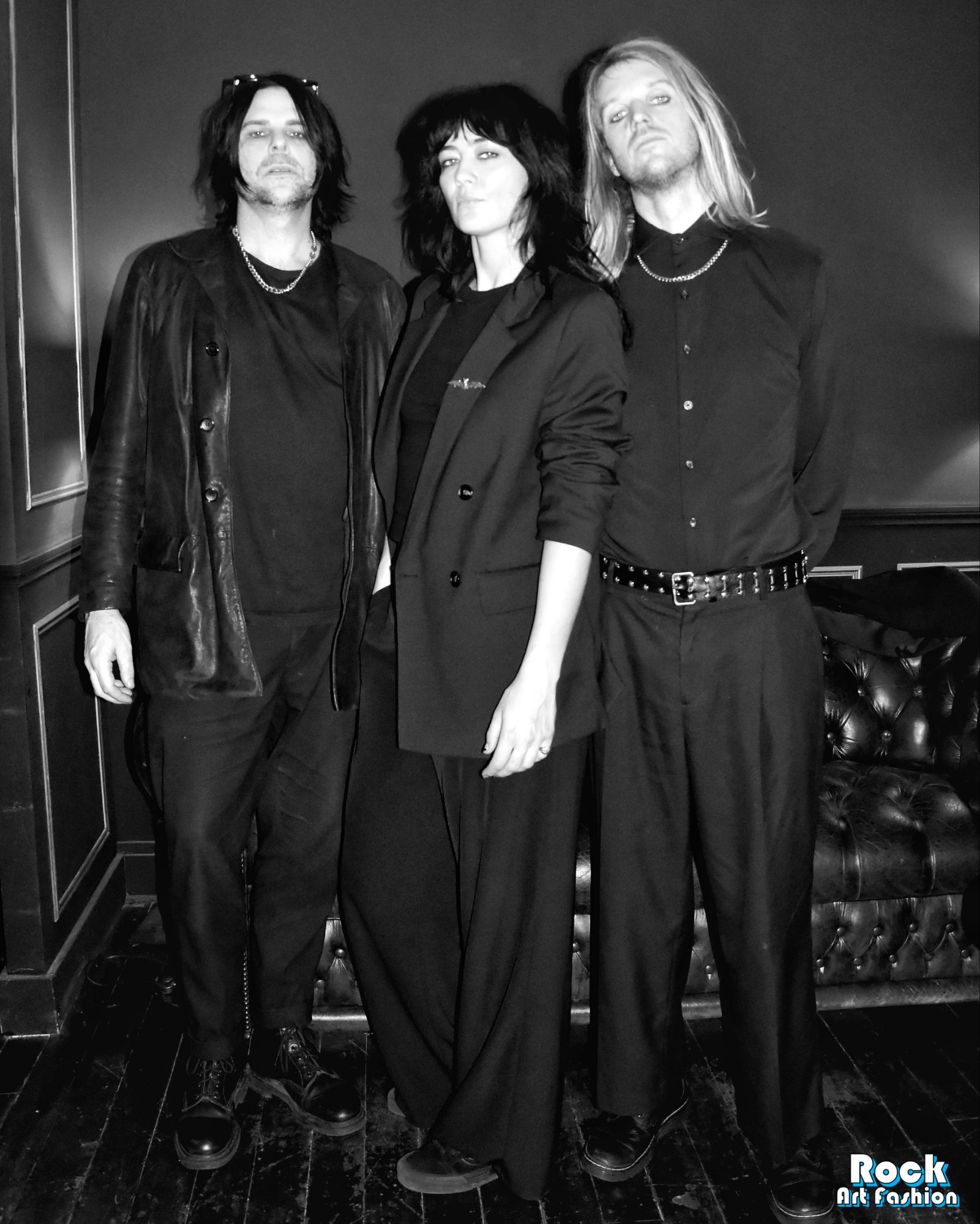
Votre fashion style a evolué : moins punk, plus élégance en noir. Qu’est‑ce qui vous a poussé à faire évoluer votre look ?
Kitty : Depuis Bloodsuckers, j’ai énormément grandi. Je n’avais pas vraiment le choix : quand quelque chose de terrible t’arrive, tu dois évoluer, trouver un peu de lumière dans toute cette obscurité. Et ça s’est forcément reflété dans la création du nouvel album.
C’est un disque plus sophistiqué, plus élégant, avec davantage d’instrumentation et de mélodie. Alors pour moi, notre apparence devait suivre cette évolution : tout doit être cohérent.
Et j’adore cette idée qu’on arrive sur scène en costumes, très apprêtés… puis on devient complètement fous. À la fin, les cravates volent, on transpire, on est décoiffés, nos tenues formelles sont en lambeaux. Il y a quelque chose de vraiment captivant dans cette élégance qui se désintègre sous l’intensité du show.
Andy : Même avant d’entrer en studio, on se disait déjà : “Et si on enregistrait en costumes ?” On voulait incarner complètement cette esthétique, et ça a influencé le projet avant même qu’on commence. Kitty dit souvent que quand elle a une idée, elle voit déjà la vidéo, le look, tout l’univers. Ça fait partie intégrante de ce que raconte la chanson. Et jouer en costume, franchement, ça te donne une allure incroyable. »
Kitty, tu avais présenté trois tenues : the Villan (la méchante), the Bad Seed (la mauvaise graine) et the Widow (la veuve). Et tu as demandé aux gens de voter sur les réseaux sociaux… moi-même j’ai voté pour Bad Seed. C’était Fun !
Kitty : Oh, cool. Bad Seed c’est le costume noir. Quand j’ai enfilé le costume Bad Seed pour la première fois, je me suis dit : “OK, c’est ça.” D’un coup, j’avais de nouveaux gestes, une nouvelle façon de bouger, une autre présence. La tenue créait presque un personnage. Elle impose une physicalité particulière, et ce costume noir… il a vraiment quelque chose.
Et puis, c’est important de s’amuser. Notre univers est très sombre, alors ces moments de légèreté comptent. Et même si notre musique est intense, il y a toujours quelque chose de drôle dans la façon dont on joue.
Jon : Il faut garder un sens de l’humour face à l’absurdité de ce qu’on fait : quatre personnes sur scène, des lumières qui clignotent… c’est un peu ridicule, quelque part. Mais ça n’enlève rien à l’émotion ni à la beauté du moment. Au contraire.
Kitty : C’est tout le spectre de l’humain, non ? À la fois ridicule et profondément significatif. Les deux peuvent coexister.
Vous réalisez également vos propres vidéos ?
Jon : Oui, comme on est Control Freaks, on réalise les vidéos aussi car c’est important. L’esthétique compte énormément : ce que tu montres influence la façon dont les gens entendent la musique.
On regarde une vidéo avant même d’écouter, alors on fait très attention à ce que l’image donne du contexte au son. Et on n’a pas de budget — vraiment pas. On est l’un des plus petits groupes du label, donc personne ne va nous financer ça.
Mais on veut quand même faire des vidéos, alors on se débrouille : on demande des services, on apprend à tout faire nous‑mêmes. Et finalement, je suis toujours fier de ce qu’on arrive à créer. On en parle jusqu’à ce que l’idée soit juste, et quand on sent que c’est la bonne, on fonce.
La photo de la pochette est très belle, vous pouvez nous l’expliquer ?
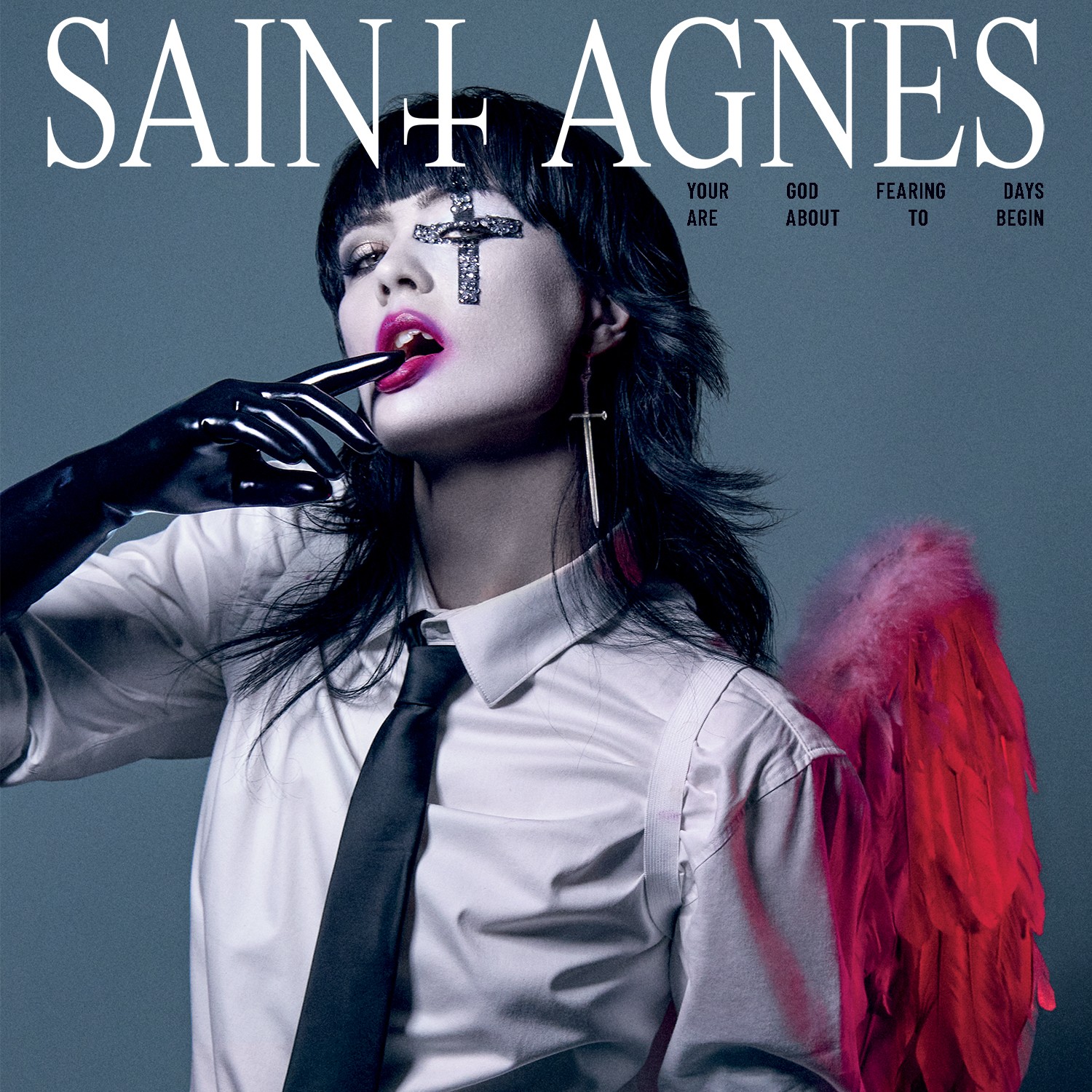
Kitty : On voulait condenser dans cette image tout ce dont parle l’album.
Je porte une cravate et la cravate, c’est le “bon garçon” : l’homme obéissant, soumis, celui qui fait tourner le capitalisme et le laisse prospérer. Le costume, lui, représente cette respectabilité de façade — alors que, dans la réalité, ce sont souvent les hommes en costume qui font les pire choses et détruisent le monde. C’est l’idée qu’on retrouve dans God Of War. On a joué avec ce contraste : l’apparence du citoyen modèle qui cache le pire.
Il y a aussi tout le côté fétichiste avec le latex qui suggère la domination, la soumission — et ces ailes d’ange cheap, qui montrent à quel point il est facile d’avoir l’air pur, angélique et d’afficher une image vertueuse. Elles sont volontairement nulles, on voit qu’elles sont fausses.
Le crucifix, lui, renvoie à la manière dont l’extrême droite détourne et déforme le christianisme pour servir ses propres intérêts.
Finalement, je voulais incarner un personnage méchant et moqueur qui rassemble tous ces symboles et les détourne.
Jon : Et puis, en quatrième couverture, on retrouve Kitty dans la même tenue, mais plongée dans un décor de bureau. J’adore cette idée : la banalité totale d’un espace de travail où se mêlent pourtant des influences de religion, de pouvoir, de business, de sexualité… toutes ces forces qui façonnent nos vies, même dans la routine la plus ordinaire.
Même quelqu’un assis à son bureau, menant une existence apparemment normale, est traversé par ces symboles. C’est ça que je trouve fascinant. Et on est vraiment très heureux du résultat final des illustrations.
L’album est très énergique, très intense, très punk rock et métal, se termine par un morceau beaucoup plus calme, plus lent, presque en suspension “Where do I begin”. Quel est son histoire ?
Jon : Sur l’album, même dans les morceaux les plus puissants, il reste toujours des touches de douceur, de beauté, des moments plus calmes. Mais celui‑ci est le seul qui assume complètement de ne jamais basculer dans le lourd.
J’avais composé cette partie de piano, toute la mélodie vocale, vraiment toute la structure… mais je n’avais pas encore les paroles. Je savais seulement que c’était une très belle mélodie. Je l’ai jouée à Kitty, et Kitty l’a immédiatement adorée.
Cette chanson existait depuis longtemps, bien avant l’écriture du reste de l’album. C’était un morceau qu’on laissait toujours de côté, jusqu’au jour où Kitty a dit qu’elle voulait vraiment travailler dessus. Et elle a gardé exactement la mélodie que j’avais écrite — ce qui est assez rare pour nous, parce qu’en général tout évolue dès qu’on commence à chanter.
Là, non : elle est partie de cette base, mais elle a écrit toutes les paroles, et je n’avais aucune idée de ce qu’elles allaient devenir. Quand on a entendu le résultat, on s’est rendu compte que c’était une chanson vraiment magnifique.
Kitty : j’ai écrit cette chanson pour remercier le groupe de m’avoir soutenue et portée à travers la période la plus difficile de ma vie. C’est presque une chanson d’amour, en réalité — une déclaration à l’amitié, à la solidité de ces personnes qui ont tout fait pour m’aider, qui ont pris mes fardeaux pour que je puisse continuer à avancer.
C’était ma façon de leur dire merci. Et aussi une forme de reconnaissance envers moi‑même : l’idée que je devais me retrouver, me relever, réapprendre à tenir debout par mes propres moyens… et que j’étais enfin prête à le faire.
Je me sens tellement mieux aujourd’hui, tellement plus forte. Mais je m’étais un peu perdue. Quand on s’appuie trop fort sur quelqu’un, on finit par un peu se perdre soi-même. Cette chanson, c’est l’aveu que je suis prête à redécouvrir mes limites, à comprendre qui je suis devenue après tout ça.
C’est une très belle manière de conclure l’album. Par où commencer (Where do I begin) … ça tombait sous le sens. J’adore cette chanson.
Y a‑t‑il, pour chacun de vous, un morceau que vous aimez particulièrement jouer sur scène ?
Jon : The Blood Beat que j’adore, et j’ai vraiment insisté pour qu’on le joue en live parce que ce morceau me fait vibrer. Au fond, c’est un titre punk rock simple, direct, brut — mais j’aime justement le fait qu’il ne rentre dans aucun schéma classique.
Sur scène, mes parties sont assez simples, ce qui me permet de vraiment performer, d’être totalement dans l’instant. Et puis il y a ce refrain où on hurle tous ensemble : Kitty, Max (notre bassiste live) et moi. On balance tout d’un seul bloc, et ça crée une puissance incroyable. J’adore ce moment.
Andy : The Beast. Je sais que c’est aussi la chanson préférée de Kitty à jouer en live. Elle fait partie de ces titres qui nous semblent presque familiers maintenant, avec toute la production qu’on a construite autour pour la scène. C’est probablement la chose la plus épique qu’on ait jamais faite.
Et ce qui est fou, c’est qu’elle fonctionne à chaque fois, sans jamais faiblir. Pour Kitty, c’est un morceau vraiment important : elle peut totalement se laisser porter par l’instant.
À chaque fois qu’on la joue, je me sens mieux, comme si elle nous rechargeait.
Kitty : The Beast est profondément personnelle : elle parle de mon parcours de deuil. C’est une chanson très intime, mais aussi très difficile à interpréter, parce que j’essaie d’y accéder avec honnêteté.
C’est un morceau terriblement triste, et le chanter reste éprouvant. Je pense à ma mère à chaque fois, et souvent je craque encore à la fin. Je termine en larmes, et j’essaie d’apprendre à me détacher un peu de la douleur brute, de l’horreur de ce que j’ai vécu, pour pouvoir raconter l’histoire sans être submergée.
C’est un travail que je refais à chaque performance : trouver une nouvelle manière d’être vulnérable sans être paralysée. Parce que chanter ça soir après soir, c’est mentalement très dur. C’est un vrai défi… mais un défi important.
Avez‑vous déjà une idée des dates prévues pour la prochaine tournée ?
Andy : On a déjà quelques festivals prévus en Europe, et on travaille aussi sur une tournée en tête d’affiche, très probablement vers l’automne.
Jon : On vient de signer avec un nouvel agent de booking, il vient tout juste d’arriver, donc il lui faut un peu de temps pour mettre tout ça en place.
Andy : Ce serait idéal de tourner l’album une fois que les gens l’ont vraiment apprivoisé, qu’ils connaissent mieux les morceaux, plutôt que juste après la sortie quand beaucoup ne les découvrent qu’en concert. Et je suis certain qu’on jouera à Paris.
On vous attend. Merci beaucoup
Saint Agnes : Merci à toi
Your God Fearing Days Are About To Begin sortie le 29/05/2026 ( Spinefarm Records)
1. Good Boy
2. The Ghost
3. The Father, The Son and The Holy Beast
4. The Beast
5. Song For Mia
6. Everything You Denied
7. The Blood Beat (Angel in the Marble)
8. Gods of War
9. Get Them Out
10. Where Do I Begin?
English Version
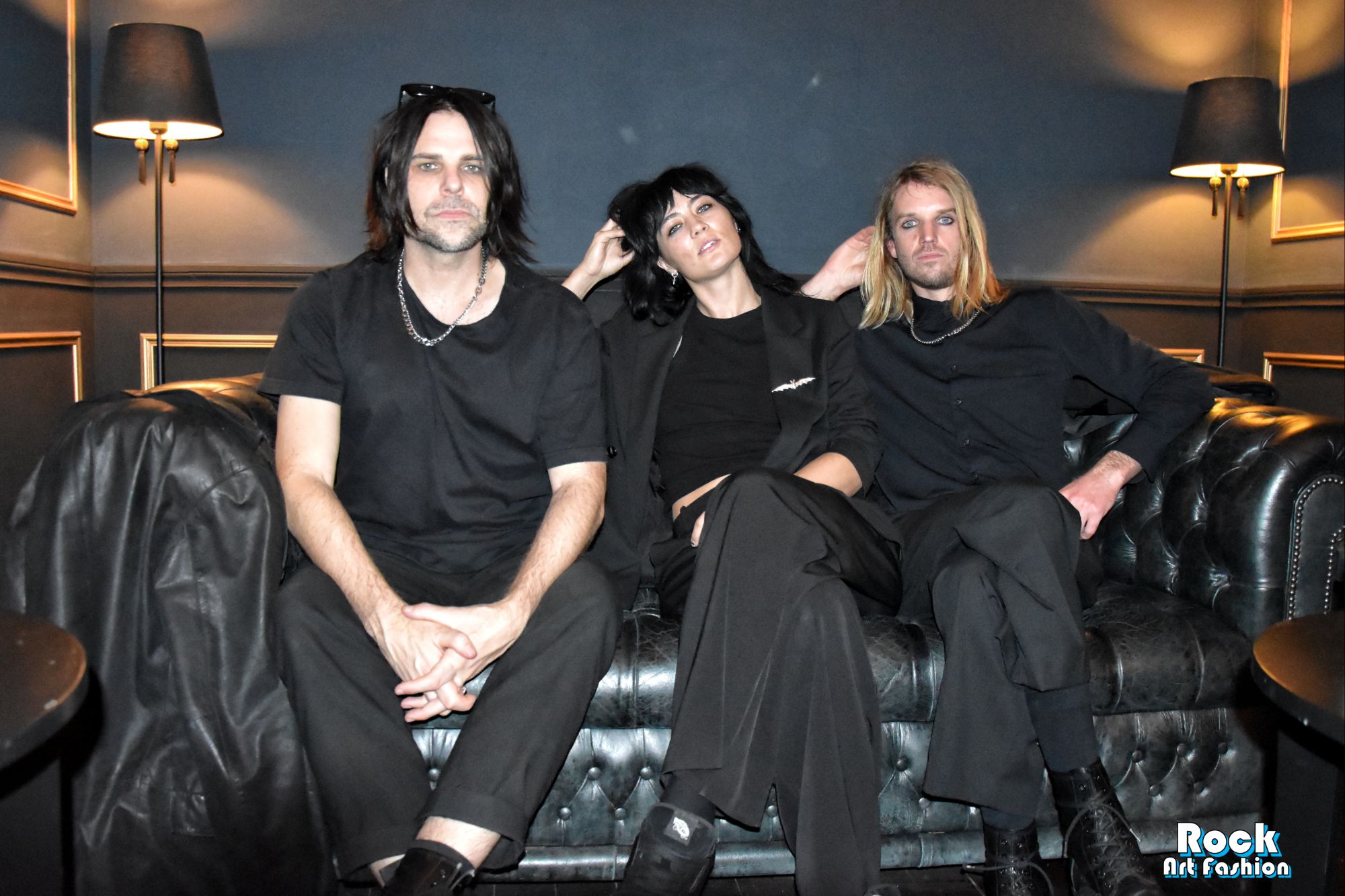
SAINT AGNES is establishing itself as one of the most electrifying rock bands of the moment, and their new album with the prophetic title, Your God Fearing Days Are About To Begin, doesn’t just drive the point home: it hits the final blow.
After the ferocious and vampiric Bloodsuckers (2023), the London trio delivers here their most accomplished record: personal, political, visceral, elegant.
Musically, SAINT AGNES widens its field of assault. Their wild and abrasive punk rock melts into a massive industrial electro worthy of Nine Inch Nails, crossed by poppy melodies, spidery synths and chaotic flashes where rage and vulnerability collide head-on.
A dark, creeping groove, which always ends up exploding. A music shaped for the stage, the bodies, and those inner abysses where dance becomes combustion.
The specter of our tormented era hovers over the ten compositions: a recognizable world, its excesses, its monsters without masks. The album hits the nail on the head, without ever falling into a sermon.
In the center we find the raw, cracking, roaring voice of Kitty A. Austen, who cuts like a sharp blade. Alongside her the colossal riffs of Jon James Tufnell and the relentless strikes of Andy Head build a tense, nervous, incandescent wall of sound.
I had the pleasure of meeting the three members of the band, who spoke to us without filter about the creation of the album, the themes that inhabit it, the intensity of their shows and their new totally black fashion style.
Dive into the interview — and into an exceptional album!
Three years after “Bloodsuckers”, you’re hitting us with a new album. How did the creative process go this time around?
Kitty : Bloodsuckers sounded the way it did because it was a very difficult time in my life. My mum had passed away unexpectedly, and it was a very difficult and brutal album to make. At the end of that process, I honestly thought, ‘Do I even want to keep doing this?’ It was that tough, that traumatic. I really had to find a way back into falling in love with writing and making music again.
So, for the new album we said no rules, no expectations, no need to make that, we had no one saying we had to make a record.
We were completely free, so we could do whatever we wanted. We went into it with really open minds about what this album could become, and we wanted the process to feel enjoyable, not torturous.
Jon: Unfortunately, we hit in the classic Saint Agnes style, and we did hit a problem.
With Bloodsuckers, we’d self‑produced everything, and we thought that with this new record, one way to fall back in love with making music was to take the technical pressure off and just be artists again.
So, we brought in a producer for this record. We spoke to a few people, but he was the one who seemed genuinely excited about what we were doing. We thought, ‘Alright, let’s go for it, we’ll make the album with you.’
And we started doing it and it became clear quite quickly that our vision of how hard we wanted to work on it did not match his vision. He was spending more time on his phone talking to his manager than actually focusing on us or the music.
So, we had these stops and starts, but that short period working with him actually gave us enough time to reflect on what we were doing. We’d gone into the process with him without a clear idea of what we wanted, but then almost immediately we realised, ‘Okay, now we know.’ We walked away from that, took back control, and did everything ourselves again—but with fresh energy. And even though I don’t particularly respect him as a person, I did learn a few technical things from him that turned out to be really useful moving forward.
We set out to make the record we truly wanted. We mixed everything—but we still felt there was room to elevate it a little further. We talked to our label, and they sent the tracks to a few different mix engineers.
The one that stood out was Jim Pinder, who’s worked with Bring Me The Horizon and Sleep Token—bands we don’t particularly sound like but he was the one who touched the mix the least. He didn’t change anything, he just made it more colourful, brighter, sweeter, bigger. He respected the work we’d already put in. That’s why we chose him for the album.
The process started in a really difficult place and ended in a really good one. Even though the journey had its challenges, we ended up with a record that’s far better than anything we could’ve made if we’d stuck to our initial process. That’s why there’s a sense of hope in the music—it reflects exactly our own feelings.
The title “Your God Fearing Days Are About to Begin” is pretty striking. What’s the story behind it?
Kitty : We like creating inside our own little bubble, our own world. That’s honestly why we’re in a band in the first place—we’re all pretty shy and awkward, and we’ve always felt slightly out of step with the rest of life. The band is our safe home, our circle of friends, our little world. We prefer creating inside that bubble, without too much outside influence.
But while we were writing the album, everything started kicking off in the world, —the rise of the far right, fascism creeping back in, everything feeling chaotic, unpredictable, crazy. That shadow hung over everything we were doing, and of course it bled into the process. How could it not?
Jon : the way the far right often uses religion to camouflage authoritarian ideas—like your “God-fearing days” were about to be and they’re going to use religion as a tool to soften the impact of what they want to do.
We were thinking about books like The Handmaid’s Tale, or even 1984—those moments in fiction and history where society reaches a tipping point. It feels like we’re at that cusp point. None of the songs are literally about that specific situation, but the songs were written with this cloud hanging over everything.
What themes and inspirations run through the record?
Kitty: All the songs are basically my thoughts on the world right now — on friendships, relationships, and everything happening around us, including politics. There isn’t an overarching concept or a single theme; the theme is really just me, where I’m at in this moment.
And that rebellious energy that’s always been in our music is still there — that urge to push back, to fight against whatever feels wrong or oppressive or I do not know what …
Jon: Expectations
Kitty : Yeah, maybe it’s about expectations. But like I said, we’ve always felt slightly outside of things as individuals, and that feeling is always present in the music. There’s a song on the record called The Ghost, which is about feeling completely alienated and unheard. And Jon told me today that he wrote it after something I’d once said to him.
Jon: Kitty told me a story saying that sometimes she’ll be talking in a group and it’s like no one hears her. She’ll think, ‘Am I a fucking ghost? Do I even exist? because it looks like I say something and no one even acknowledges that I’ve said it”
When she told me that, it really resonated with me. It made me think there was something powerful in that feeling, so I wrote a few lines just to plant the seed of an idea.
When Kitty heard them — and after a bit of persuasion from me that this was worth pursuing — she immediately understood where it was heading and wrote the rest of the lyrics.
At the start, it was literally just two or three lines, things she’d said to me that I’d put into a song and handed back to her. Then we finished it together. There’s something beautiful about that: the fact that her saying that she often feels unheard led to me hearing her so clearly and that it became a song she then completed by herself. It’s a kind of full‑circle moment, and I’m really happy with how it turned out.
“Everything you denied” it’s also a strong, angry song. It looks quite personal for you Kitty.
Kitty: It is about a specific person, but I’d rather not go into that. What it really deals with is the idea of defying expectations — that feeling of people trying to put you in a box when they don’t even understand who you are. “You can’t put me in a box, because you don’t even understand who I am. How can you possibly put me in a box?” How can they define you if they don’t even see you clearly? And I think it’s a universal. That’s something the three of us relate to on a very deep level.
Jon: Yeah, when someone denies your existence or your reality — refuses to see who you are and actively chooses not to — it really messes you up. And with that song, it was obvious where the music needed to go to match that intensity.
Andy: It was also one of the first tracks we actually played together in a room as a band. A lot of the album now has these different sounds that come from more computer‑based exchanges.
Jon: yes, that one started more as a rock band song.
Kitty : I think it’s a really healthy way to deal with things. You can fight, you can rail against, you can say everything you need to say — but in the end, people rarely change their minds. There’s nothing you can do to force that.
So, stepping away and writing a song about it… then standing onstage and screaming it with a thousand people who feel the same grief — that’s really good and a healthy way to deal with that emotion. Otherwise, you’re just smashing your head against a wall. It’s one of the most effective ways I know to get rid of that bad feeling.
Your shows are incredibly intense. How do you prepare for something that demanding — physically and mentally — so you can sustain that energy from the very start?
Jon : We’re honestly very bad with the physical side. None of us warm up, none of us stretch — we just throw ourselves straight into it and we just embrace the emotion that we’re feeling.
We’re all kind of control freaks about the band, and I think that’s important. I don’t understand bands who aren’t, because if it’s your music, you should care deeply about every part of it. And we do — intensely.
Playing live is the one moment where you can shut off the voices in your head, stop overthinking, and just be in the moment. Reaching that mental state is incredibly hard.
The only way we’ve found to reach that state is to throw ourselves into it physically and emotionally, and hope the wave carries us. And when it does, it’s absolutely amazing — completely euphoric.
You have to try go for it, and if you don’t get there, it feels like you’ve wasted the show.
We’re always chasing that moment, and it’s incredibly hard to achieve. Other musicians we’ve talked to feel the same. It’s an interesting state, — you’re trying to switch your brain off and be entirely present in the moment.
So, we don’t really prepare much on the mental or physical side. What we do prepare is the technical side — as much as possible — so that when we’re onstage, we don’t have to think about any of that.
We’ve rehearsed every scenario, we know what can go wrong, because we break things all the time. It’s chaotic; you never know what’s going to happen. But we trust ourselves. We’ve learned how to keep going no matter what and not let the emotional intensity disappear.
What about the crowd — what state of mind are they in as they leave the room after your show?
Kitty: I just hope they’ve really felt something. Maybe it connects to something in their own lives: I’d like to think that if they come to a Saint Agnes show they walk away feeling something real, whatever that emotion is : anger, joy, sadness, even grief. And I also hope they feel that connection I have with them now. The energy I send out comes back to me. It’s become a two‑way thing, and I hope they feel that too.
Jon: We’re not trying to be Mötley Crüe, pretending to look cool and the girls in the front row think our trousers are nice and tight (laughing) . That’s not why we’re there. The show isn’t really about us — it’s about us and the audience reaching this almost spiritual state together, where you stop thinking and it’s just pure immersion into the sound.
Kitty: It’s something that’s really missing in modern society. We’re always on our phones, on social media — we look connected, but we’re actually so disconnected. I just want real conversations, to be present in a room with someone, and that’s becoming rarer and rarer. That’s why, I think music and gigs are one of the last places where we can still come together and genuinely feel something — be totally present, in the moment.
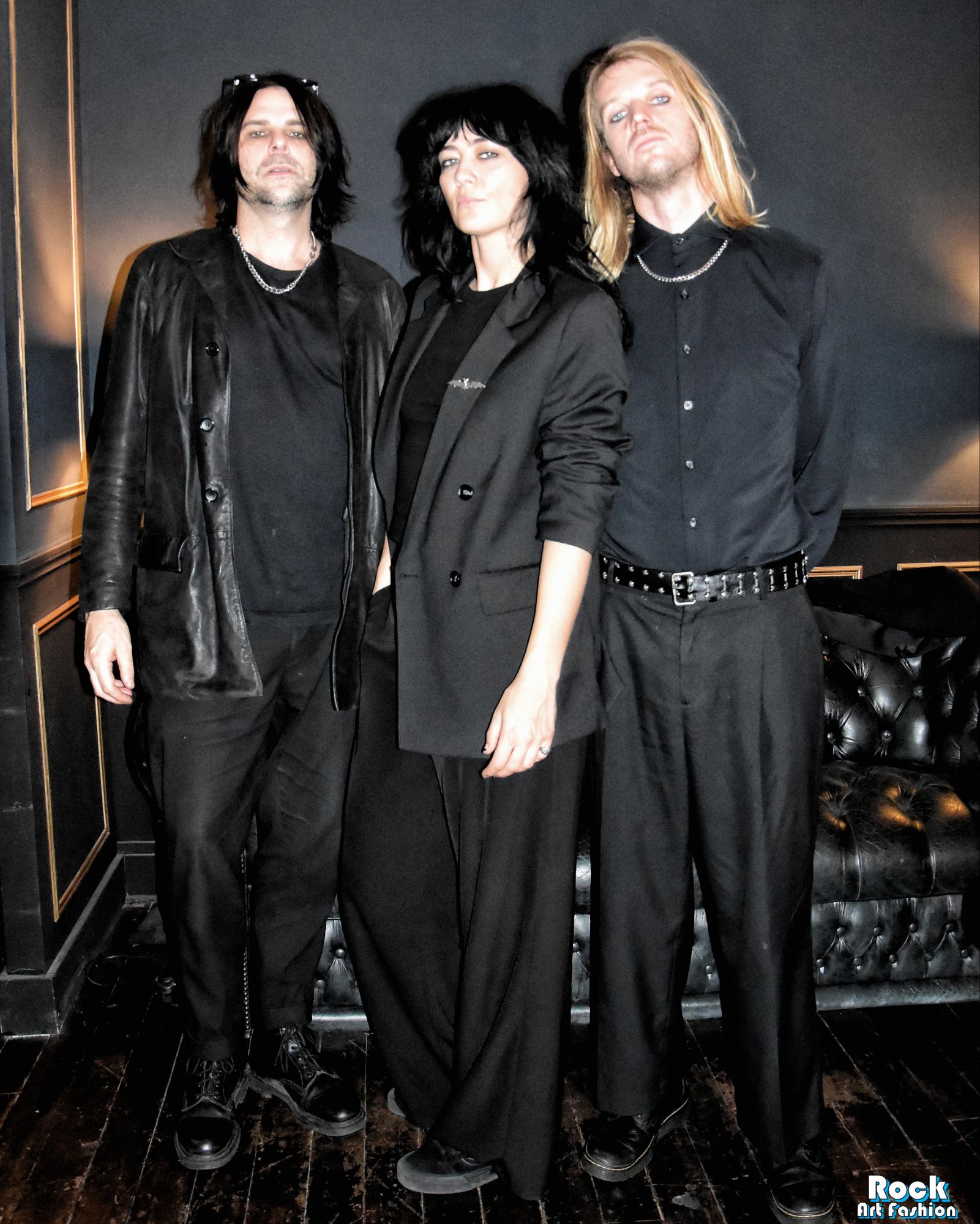
Your fashion style has evolved — less punk, more black elegance. What sparked the decision to switch up the outfits?
Kitty: From Bloodsuckers, I’ve grown so much as a person — I had to. It was really a ‘grow or die’ moment. When something awful happens, you have to reach out, evolve, and try to find some kind of light in all that darkness. That carried straight into making the album.
It’s a much more sophisticated, elegant record, with more instrumentation and more melody. And I think the way you present yourself has to reflect the music — it all needs to fit together. There’s something I love about us being in suits, smartly dressed … and then completely losing our minds on stage, get crazy.
By the end, the ties are off, we’re sweating, we’re completely dishevelled. There’s something really striking about that contrast — the formal outfits falling apart as we’re absolutely wrecked.
Andy : Even before we went into the studio, we were already saying, ‘What if we wore suits in the studio?’ It influenced everything before we even started. Kitty often says that when she gets an idea, she sees the whole thing — the video, the look, the world around the song. It all comes as one. And honestly, playing in suits makes you feel incredibly cool.
Kitty, you came up with the idea of the three outfits — the Villain, the Bad Seed, and the Widow — and you even asked people to vote for their favourite on social media. So FUN! I voted for Bad Seed.
Kitty : Oh, cool — “Bad Seed” is the black suit. The first night I wore it, I immediately thought, ‘Yes, this is it.’ I had new movements, a new way of carrying myself. Each outfit gave me a completely different physicality on stage — it was crazy, like the clothes created their own persona. And the suit just feels amazing to wear.I think it’s important to have fun. We’re a very dark band, so those moments of levity matter. Even when the music is intense and heavy, there’s always something funny in the way we play.
Jon : You have to keep a sense of humour about the absurdity of it — four people on a stage with flashing lights everywhere. Part of it is undeniably silly, but that doesn’t stop it from being emotional and beautiful. I think that’s the point.
Kitty: The full spectrum of what it is to be human, isn’t it? It’s ridiculous, but it’s also meaningful and profound. It can be both things.
You’re also doing the videos by yourselves, right?
Jon: Yeah, exactly — Control Freaks. It really matters how something looks, because it shapes how people hear it. When you watch a video, you’re actually watching before you’re listening. So, we’re very aware of making sure the visuals give the music the right context. And we don’t have a big budget — actually, no budget.
We’re one of the smallest bands on our label, so there’s no money being handed to us for this. But we still want to make videos, so we ask for a lot of favours, and we’ve learned how to do almost everything ourselves. And I’m always really proud of what we manage to create. We just keep talking an idea through until it feels right, and then we go, ‘Yep, that’s the one — let’s do it.’”
Let’s talk about the cover. What specifically inspired you to shoot that image?
Kitty: We wanted the cover to symbolise everything we’re talking about on the record. I’m wearing the tie — the ‘good boy’ symbol — which ties into this idea of obedient, submissive men who keep capitalism running and allow capitalism to be ramping. And then there’s the idea in God Of Wars that it’s the men in suits who are destroying the world. A suit represents respectability; you look like an upstanding citizen. But in reality, it’s the Men in Suits who are doing the worst things.
There’s a whole playfulness in the imagery — the fetish elements like latex, so idea of dominance and submission. Then you’ve got the cheap angel wings, which show how easy it is to look ‘angelic,’ to project this image of goodness to the world. But they’re deliberately cheap and crappy. You can see how fake it is. Everything was very intentional. The crucifix ties into the way the far right twists and distorts Christianity for its own ends.
That was the idea of this photo — I wanted to be this mocking villain figure who carries all those symbols at once.
Jon: And on the back cover, there’s Kitty in the same outfit, but placed in this almost mundane office setting. I love that contrast — the banality of an office space mixed with all these themes of religion, business, power, sexuality… all these forces that shape our lives. They’re present even in the most ordinary moments, like someone just sitting at a desk living a normal life. There’s something about that layering that I find really interesting. We’re very happy with how the artwork turned out.
The whole album is loud, intense, punk‑and‑metal energy — and then the final track, Where Do I Begin, suddenly slows everything down. What’s the story behind that song ?
Jon : On the album, even the loudest tracks still have moments of beauty, softness, and calm. This one just happens to be the only song with no loud parts at all. I’d written the piano line and the entire melody for vocals— the whole structure, really — but I didn’t have any words yet. I just knew it was a beautiful melody.
I played it to Kitty, and she really loved it. It had been around for a long time, actually — from before we wrote the rest of the album. We kept forgetting about it. Then Kitty said she wanted to work on it, and she stuck exactly to the melody I’d written, which is unusual for us. Normally things change once you start singing something, it naturally changes.
But Kitty began with the melody exactly as it was and wrote all the lyrics herself — I had no idea what they were going to be. And when we finally heard it, it turned into this really beautiful song.”
Kitty : I wrote this song as a thank you to my band for holding me up and helping me through the most difficult time of my life. It’s a like a love song — to friendship, to how solid they’ve been, how they carried every burden so I could keep going and do what I was able to do.
It was my way of saying thank you, but also of acknowledging that I needed to become my own person again, to stand on my own two feet — and that I was finally ready to. I feel so much better now, so much stronger. But I had lost myself a bit. When you lean on someone that hard, you kind of lose yourself.
And it was also an acknowledgment that I’m finally ready to figure out where I end and where I begin — who I am now, after everything. It felt like such a beautiful way to close the record. Where Do I Begin just made perfect sense. I think it’s the perfect ending of the album. I love that song.
For each of you, is there a song that you love playing live the most?
Jon: The Blood Beat. I’ve really pushed for us to play that one live because I love it so much. it’s a simple, straightforward punk‑rock song, but I love how it doesn’t conform to any normal process within that. And live, my parts are pretty simple, which means I get to really perform and be fully in the moment.
I also love that the chorus is just the three of us yelling together — me, Kitty, and Max, who plays bass live with us. All of us shouting that chorus at once feels incredibly powerful. I love that.
Andy :The Beast, which I know is also Kitty’s favourite, and for us it’s become so familiar — especially the whole live production we’ve built around it. It’s probably the most epic thing we’ve ever done. We’re really proud of that. It’s a hugely important song for Kitty, and it’s so easy for her to drop straight into the moment. I feel better every single time we play it.
Kitty : The Beast as well, because it’s super personal — it’s about my journey through grief. It’s very intimate, but also really hard to perform, because I try to approach it with complete honesty.
It’s such a sad song, and it’s really hard to sing. I think about my mum every time, and most nights I still I cry at the end. I finish with tears in my eyes. I’m trying to learn how to separate myself just enough — to tell the story without being so painful, while still allowing some emotion through. It’s something I work on every time we play it. I’m constantly finding new ways to stay vulnerable without being completely overwhelmed. Singing something like that every night is mentally difficult, but it’s also an interesting challenge.
Do you have already the touring dates?
Andy: We’ve got a couple of festivals lined up in Europe, and we’re still working on the headline dates. It’ll most likely be in the autumn.
Jon: We have a new booking agent, and he’s only just come on board, so he’s got needs time to.
Andy : It would be great to tour the album once people have lived with it for a while and really know the songs, rather than touring right at release when no one’s familiar with them yet. But I am sure.We will be in Paris.
We wait for you ! Thank you very much for your time
Thank you
Your God Fearing Days Are About To Begin sortie le 29/05/2026 (Spinefarm Records)
1. Good Boy
2. The Ghost
3. The Father, The Son and The Holy Beast
4. The Beast
5. Song For Mia
6. Everything You Denied
7. The Blood Beat (Angel in the Marble)
8. Gods of War
9. Get Them Out
10. Where Do I Begin?
 Rock Art Fashion
You must be logged in to post a comment.