

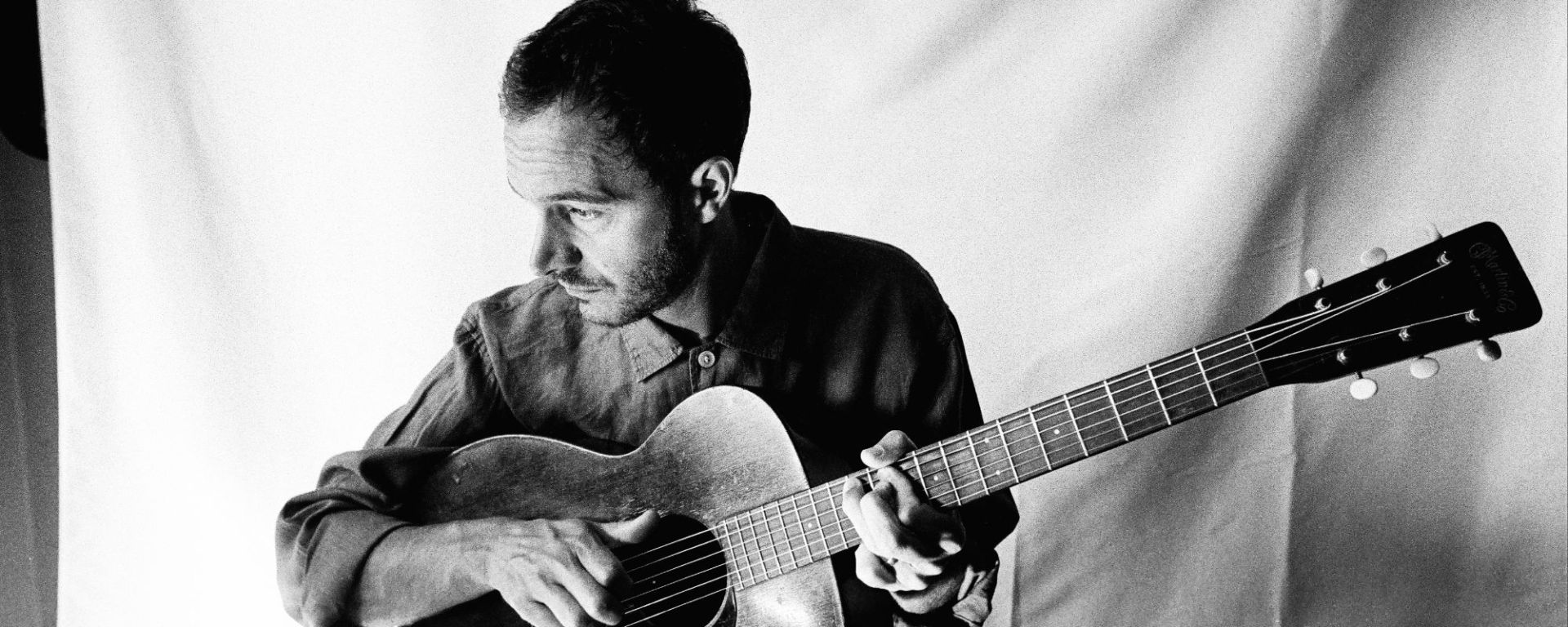

Depuis plus de vingt ans, Tom Smith incarne la voix sombre, intense et magnétique d’EDITORS. Le 5 décembre 2025, il a franchi une nouvelle étape de sa carrière en dévoilant son premier album solo, There is Nothing in the Dark That isn’t there in the Light.
Une œuvre profondément intime, où l’ombre dialogue avec la lumière et où chaque mélodie, dépouillée et sincère, évoque à la fois la douceur des souvenirs et la force des émotions brutes.
Animé par le désir de retrouver la simplicité acoustique de ses débuts d’auteur-compositeur, il s’aventure ici sur un terrain plus personnel. À travers dix magnifiques chansons portées par une guitare acoustique ou un piano, il explore la nostalgie, les réminiscences et les émotions à vif, offrant un regard sincère et émouvant sur son parcours artistique et humain.
Peu avant la sortie de l’album, j’ai eu le plaisir de m’entretenir avec Tom Smith, via Zoom, pour évoquer la genèse de ce projet singulier, son processus créatif, les inspirations qui l’ont guidé vers cette nouvelle aventure musicale. Nous avons eu aussi l’occasion de parler de ses premiers pas dans la musique, ainsi du nouvel album d’EDITORS, actuellement en préparation. Très belle rencontre avec un artiste complet et profondément humain.
N’oubliez pas d’écouter ce superbe disque et venez le voir en concert à Paris, à l’Alhambra, le 10 avril 2026. (toutes les dates de la tournée https://tomsmith.os.fan)
Salut Tom. Comment ça va ? Dans quel état d’esprit es-tu avant de dévoiler ton premier album solo ?
Tom : ça va bien, merci. Je suis un peu anxieux, excité…c’est une sensation étrange, mais agréable et réconfortante.

Quand l’idée de faire un album solo a-t-elle été envisagée pour la première fois ?
Tom : J’y réfléchissais depuis pas mal de temps, par intermittence, je dirais depuis une dizaine d’années.
Mais c’est plutôt concrétisé après le dernier album d’EDITORS. J’avais en tête différentes collaborations et, je me suis dit, eh bien, c’est maintenant… ça ressemblait un peu à maintenant ou jamais.
J’avais l’impression que si je ne le faisais pas à ce stade de ma vie, je n’étais pas sûr de le faire un jour, vraiment. Les chansons que j’écrivais à l’époque étaient assez personnelles et honnêtes, elles semblaient tout à fait adaptées à un album solo.
Donc oui, il y a eu peu de réflexion. Le temps presse pour moi, je ne veux pas dramatiser mais j’ai pensé que si je ne le fais pas maintenant, je vais entrer dans un autre disque d’Editors, peut-être un autre de Smith & Burrows et ensuite, j’aurai 50 ans avant de le faire si jamais je le fais.
Alors c’était le bon moment maintenant…
Tom : ce n’est pas vraiment une question du bon ou mauvais moment mais plutôt de suivre son instinct et l’inspiration et de prendre les décisions en fonction de cela.
Le titre, There is Nothing in the Dark That isn’t there in the light est magnifique. Quand et comment tu as eu l’idée de ce titre ?
Tom : Ces paroles me sont venues quand j’écrivais « Deep Dives » avec Iain. C’est venu très vite, et ça a parfaitement fonctionné dans cette chanson.
Mais au fur et à mesure que l’album prenait forme, et quand j’ai commencé à réfléchir à l’album dans son ensemble et aux thèmes et aux choses auxquelles je revenais sans cesse, j’ai eu l’impression que ces paroles reliaient pas mal de chansons.
Il y a une sorte d’espoir dans cet album, et il y a une sorte de réconfort dans certains de ces textes. J’ai pensé à ces paroles et je me suis dit, en fait, ça parle de tout l’album, pas seulement dans cette chanson, donc ça avait du sens de choisir ce titre.
Il y a de la lumière et il y a aussi de l’obscurité, il y a beaucoup de piano, beaucoup de guitare acoustique, quel est ton point de départ pour construire ces chansons ?
Tom : Je voulais présenter mes chansons d’une manière plus proche de la façon dont je les ai toujours écrits. Et chaque fois que j’ai écrit une chanson ces 20 dernières années, pour Editors ou pour quelqu’un d’autre, c’est toujours moi, assis avec ma guitare acoustique ou au piano. Mes chansons naissent de cette manière.
Évidemment, avec le groupe, ces idées partent en voyage, et elles finissent souvent à une destination différente.
Je tenais à ce que mon album solo montre mes chansons dans leur forme la plus authentique, comme lorsque je les compose.
L’idée était de montrer mon travail dans une forme plus fidèle à ce qu’il est au moment de l’écriture. Je voulais être naturel et assez épuré.
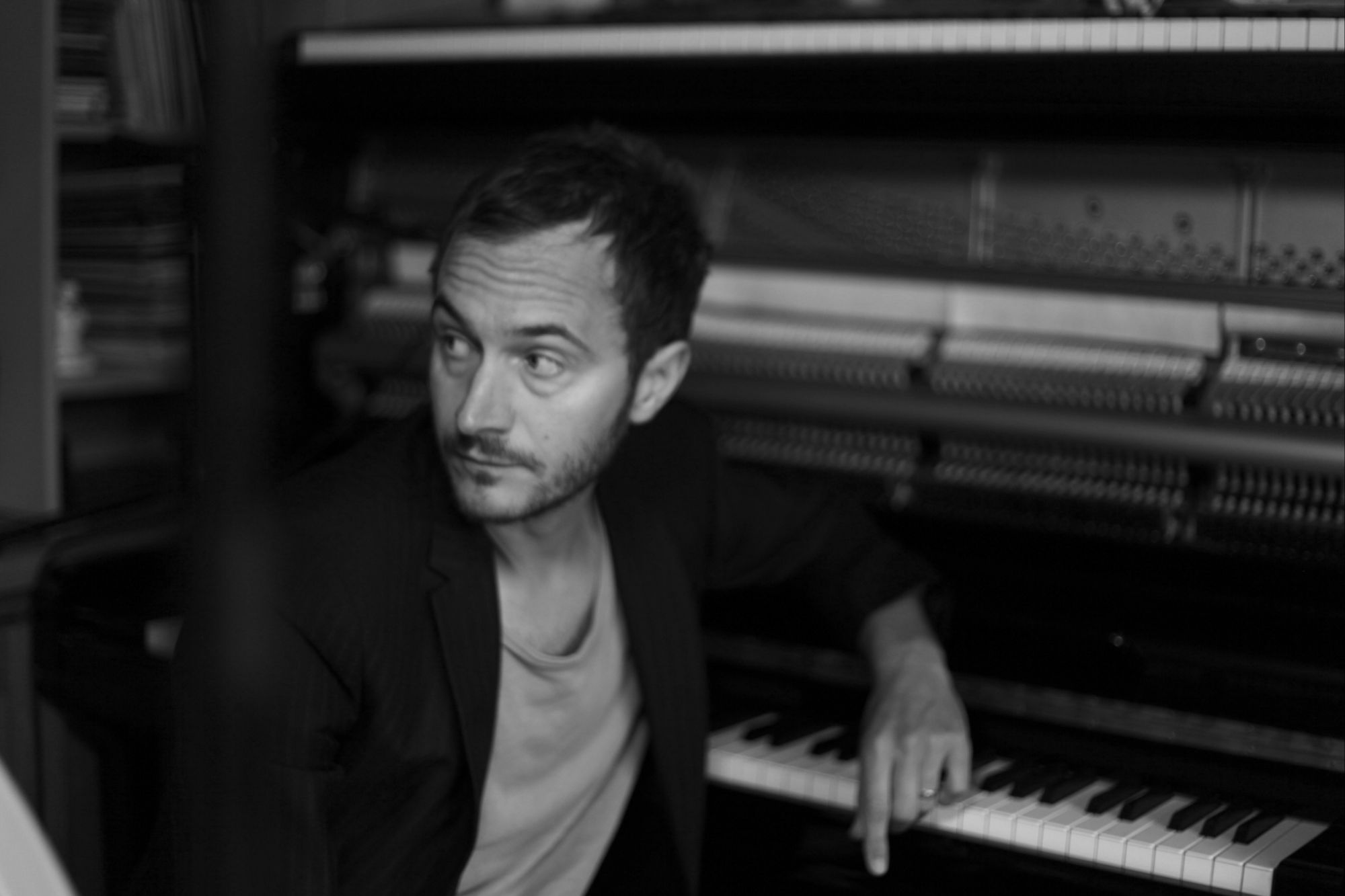
On a l’impression que chaque chanson a sa propre histoire. New York semble beaucoup t’inspirer. Quelle est ta relation avec cette ville ?
Tom : Oui, New York apparaît plusieurs fois dans l’album. Évidemment, Londres est là aussi. En fait, mon raisonnement, ou mon inspiration, était de penser à moi quand j’étais plus jeune, penser à certains chapitres de ma vie.
J’ai pensé à qui j’étais quand je suis allé dans ces endroits pour la première fois. C’était une époque très différente de celle d’aujourd’hui, mais une période assez inspirante et excitante.
Et même si ces chansons parlent un peu de ces lieux, elles parlent davantage de moi à cette période de ma vie, et peut-être de moi avec une perspective différente, un autre sens de l’émerveillement et de cette sorte d’excitation de la jeunesse.
J’ai repensé à cette personne qui j’étais et je regrettais un peu cette excitation et cette énergie de jeunesse, ce sentiment d’émerveillement et de désir pour cette époque.
J’ai eu la chance avec le groupe de visiter beaucoup d’endroits inspirants dans le monde.
Evidemment, New York, pour la première fois en tant que jeune musicien, c’était très inspirant bien sûr, c’était différent de tous ce que j’avais visité auparavant.
Lights of the New York City parle plutôt de moi qui dit adieu à la jeunesse, à un chapitre de ma vie que de la ville elle-même.
Je voulais que la chanson évoque ce contexte, avec ce trompettiste en solo tout au long du morceau qui a donné au titre une ambiance typiquement new-yorkaise.
Tu as vécu à Londres et Northern Line semble évoquer des souvenirs spéciaux.
Tom : Oui, j’y ai vécu depuis le milieu de la vingtaine jusqu’à il y a environ six, sept ans. J’ai 44 ans maintenant. Donc oui, j’ai vécu une bonne période de ma vie là-bas.
Dans cette chanson, je parle de Smith & Burrows et je pensais spécifiquement à Andy (Andy Burrows),
On vivait dans le même coin de Londres tous le deux, on était tous les deux dans des groupes qui traversaient des moments excitants, et on a créé des liens grâce aux disques que nous avons fait ensemble.
Mais on a aussi vécu des choses similaires, comme avoir des enfants à la même période pour la première fois. J’ai de très bons souvenirs de cet endroit, de cette personne et de cette époque.
Je me sens maintenant comme dans une autre partie de ma vie. C’est un peu dramatique de dire que je ressemble à une autre personne, mais je reconnais pleinement que c’est une version plus jeune de moi dans un autre chapitre de ma vie.
Donc oui, j’ai trouvé de l’inspiration en regardant en arrière et en ressentant de la nostalgie à ce sujet.
Si tu devais choisir qu’une seule chanson pour représenter cet album, laquelle tu choisirais ?
Tom : Ma chanson préférée est Endings Are Breaking My Heart. Il y a une complétude dans les paroles que j’apprécie.
Dans cette chanson, j’énumère des choses qui arrivent à leur terme, certaines banales et d’autres plus graves. J’y suggère l’idée de la mortalité, en évoquant le dernier souffle, mais aussi des images plus quotidiennes : des fleurs qui se fanent sur la table, le dernier verre d’une soirée ou encore un groupe qui quitte la scène.
J’ai aimé le concept de cette liste de choses, et j’ai trouvé, à travers cette chanson, une manière qui m’a vraiment parlé. Je suis vraiment fier de cette chanson.
Dans tes vidéos, tes photos, tu es souvent au milieu la nature. Est-ce que tu te sens en communion avec la nature ?
Tom : Oui, je pense que oui. Je reviens juste de promener le chien (rires). J’ai grandi dans une région rurale d’Angleterre. Et ma famille et moi sommes revenus vivre là où j’ai grandi il y a environ cinq ou six ans.
J’ai donc définitivement renoué avec la verdure et la vie en plein air ces cinq dernières années. C’était assez naturel de quitter la ville. Beaucoup de gens font ça.
Je viens aussi de terminer une petite tournée, qui s’est déroulé au Royaume-Uni, et c’était vraiment une belle exploration. C’était assez aventureux.
On a visité beaucoup de petites villes, beaucoup de régions reculées d’Écosse et d’Irlande, de campagnes et de coins un peu isolées. C’était très beau, et ça semblait avoir un lien avec cet album
Iain et moi étions constamment en train de chercher des adjectifs liés à la nature comme « woody » (boissé) et « airy » (aerée) quand on faisait des enregistrements de guitares ou de voix.
Je suppose que ça reflète aussi qui je suis en ce moment, un homme d’un certain âge…
En parlant de Iain, comment est-ce que tu as rencontré Iain Archer et comment avez-vous décidé de collaborer ensemble ?
Tom : J’ai rencontré Iain, il y a environ 20 ans quand Editors faisaient des shows avec Snow Patrol et qu’on traînait beaucoup ensemble. On a passé pas mal de temps avec eux et on a beaucoup socialisé. On est des bons amis avec eux tous. Iain faisait partie de ce groupe, et lui et sa femme vivaient dans le même coin, encore une fois, du nord de Londres, où je vivais.
On se voyait de temps en temps. Et évidemment, au fils des années j’ai suivi de son travail. Dernièrement, il a fait de plus en plus de production. Notamment, il a fait un disque l’année dernière, avec Morgan Harper Jones et j’ai vraiment adoré le ressenti de ces enregistrements.
Son nom est venu dans une conversation avec mon manager et mon label quand on parlait des gens avec qui je pourrais passer du temps pour essayer de développer mon album.
“Je tenais à ce que mon album solo montre mes chansons dans leur forme la plus authentique, comme lorsque je les compose.” Tom Smith
Et évidemment, parce que j’avais cette amitié avec lui, j’étais assez intrigué. On ne sait pas si les choses vont fonctionner tant qu’on ne se retrouve pas à travailler dans une pièce avec quelqu’un.
On a donc fait un essai et on a passé trois jours ensemble et la première chose qu’on a faite a été Deep Dive. C’est devenu la première chanson de l’album, une chanson vraiment importante dans la germination de l’album.
Je pense que nous avons très vite compris qu’il existait une grande distance entre nos univers créatifs, mais nous avons trouvé le point où ils se rejoignent. C’est là que nous avons travaillé, dans cet espace de chevauchement où la collaboration devient possible.
Comme tu l’as dit, tu étais en tournée au Royaume-Uni et en Irlande, et tu as chanté ces nouvelles chansons à côté des chansons d’Editors. Comment tu as ressenti la réaction du public ?
Tom : Oui, effectivement, j’ai joué une bonne partie de cet album et beaucoup de chansons des Editors. C’était magique. C’était vraiment agréable de jouer devant de très petites foules.
Les gens ont été intéressés et enthousiastes à l’idée de découvrir mon album. Mais en même temps, c’était un véritable voyage dans le passé, pour les fans de d’Editors.
J’ai passé beaucoup de temps avec les fans après les shows, à discuter et à vendre des t-shirts, et ça m’a vraiment passionné. J’ai rencontré beaucoup de gens et beaucoup m’ont dit qu’ils suivaient le groupe depuis 20 ans.
Ils m’ont partagé ce que cela représentait pour eux, quelles chansons avaient le plus d’importance et pourquoi. Ils m’ont raconté des épisodes de leur vie où certaines de nos chansons étaient présentes. C’était profondément émouvant, assez intense et incroyablement gratifiant.
J’ai aimé jouer les nouvelles chansons.
Tout semblait s’emboîter très bien avec les chansons d’Editors, parce que finalement, ce sont toutes des chansons que j’ai écrites, elles font toutes partie de moi. Ça ressemblait vraiment à un recueil de chansons à la Tom Smith.
J’ai hâte de recommencer. L’année prochaine en mars et avril, il y aura beaucoup de concerts en Europe, y compris en France dans des petites salles.
C’est drôle parce qu’évidemment quand je monte sur scène avec le groupe, les concerts sont un peu plus grands, plus bruyants, la scène est haute et je porte des écouteurs et en quelque sorte je suis assez séparé du public.
Mais dans ces concerts, tout le monde était assis et c’est tellement calme. C’est étrangement silencieux. C’est une chose complètement différente.
J’ai commencé à vraiment apprécier à quel point c’était gênant le silence, puis les gens qui se mettaient à rire nerveusement.
Je ne suis pas vraiment du genre à raconter des anecdotes ou des blagues, et je ne suis pas très à l’aise pour parler en public. Mais j’ai beaucoup apprécié l’échange direct avec le public dans cet environnement, car c’est totalement différent de tout ce que j’ai connu en tant qu’interprète.
Quelle est ta relation avec la mode ? Quand tu montes sur scène, penses-tu à ce que tu vas porter ou ce n’est pas si important pour toi ?
Tom : Oui, je veux dire, au fil des années, j’y ai un peu réfléchi. A chaque tournée ou peut-être avec chaque période du groupe, j’ai tendance à porter la même chose. Si je trouve ce que j’aime, j’acheté en plusieurs exemplaires ainsi, je n’ai pas à décider quoi porter chaque soir.
J’aime à quel point c’est simple, mais oui, je m’intéresse à la mode bien que à contrecœur. Je me sens mal à l’aise d’en parler, mais j’aime qu’il y ait un certain look et il y a une certaine esthétique qui m’attirent.
Je dirais que tu as plutôt un style minimaliste : T-shirts, chemises, vestes en cuir, plutôt le noir et le blanc.
Tom : (Rires) oui, absolument,je me retrouve dans le minimalisme.
Revenons à tes débuts. Comment est-ce que tu as commencé faire de la musique et qui ou quoi t’a donné l’envie
Tom : Je suis né au début des années 80, donc j’ai passé mon adolescence au milieu des années 90. Je faisais de la musique à l’école, et quand j’avais 13-14 ans, OASIS a explosé, on les voyait partout en Angleterre.
Peu de temps après, j’ai pris une guitare et j’ai essayé d’apprendre à jouer leurs morceaux. Ensuite j’ai découvert des groupes comme Radiohead et REM et un peu plus âgée, je suis allé à mes premiers concerts.
J’habitais près du Festival de Glastonbury, donc Glastonbury 1997 a été ma première vraie expérience de festival. J’ai vu Radiohead cette année-là et j’ai compris que c’était ce que je voulais faire, être sur cette scène.
Je passais la plupart de mon temps dans ma chambre à essayer d’écrire des chansons tristes. Et pour être honnête, je fais la même chose maintenant à 44 ans.
Donc oui, c’est vraiment cette période du milieu des années 90 qui m’a poussé à prendre la guitare et à essayer d’écrire des chansons, et je continue depuis.
Quand j’ai rencontré le groupe à l’université, on s’est rapprochés grâce à ce genre de groupes, mais aussi à d’autres groupe de début des années 2000. On a formé cette relation musicale qui est devenue, Editors Part One. Et on a fait Back Room.
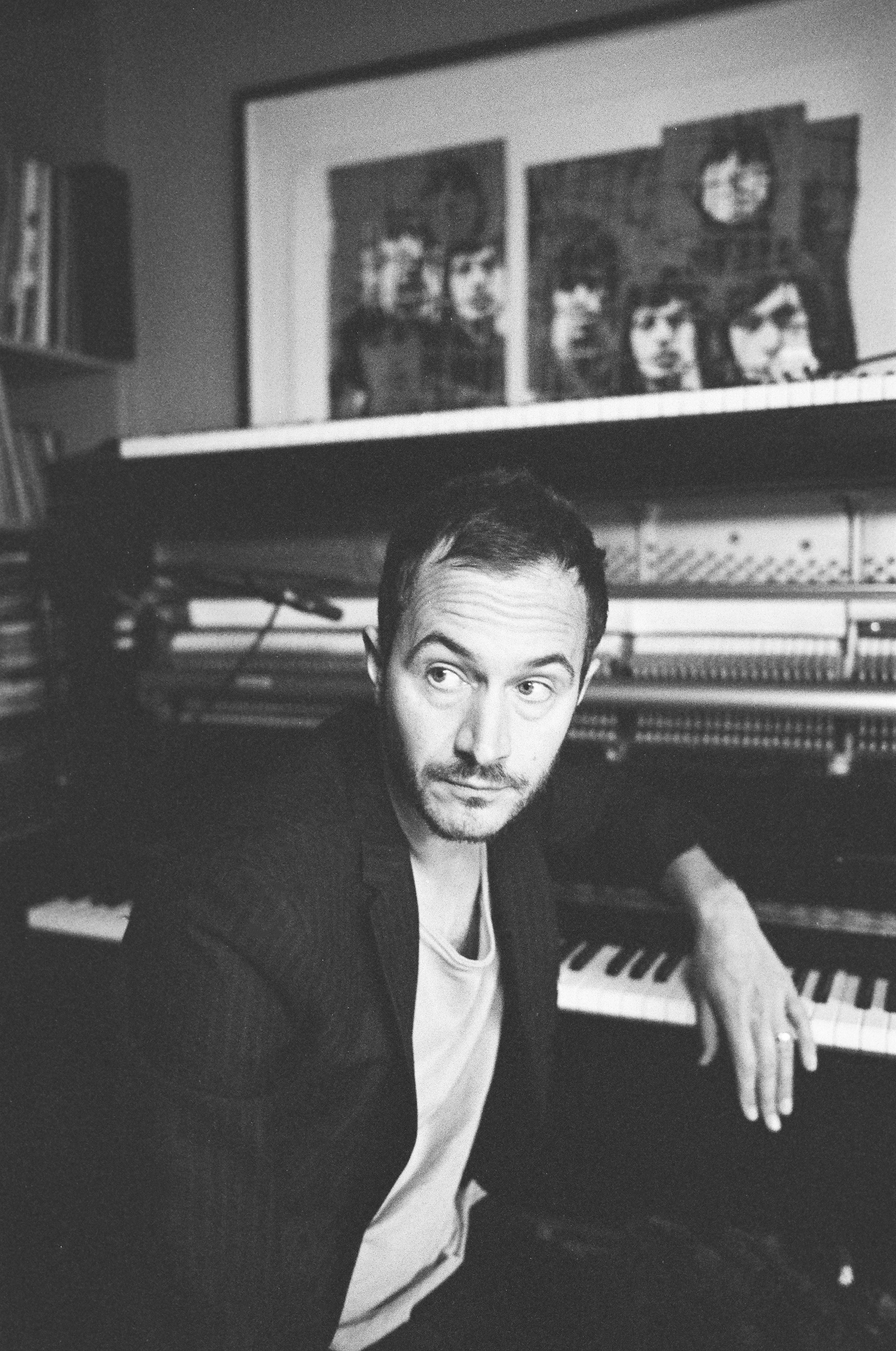
Quelle différence vois-tu entre l’écriture d’une chanson il y a 20 ans et aujourd’hui ? Ton approche a-t-elle changé ?
Tom : Je me souviens d’être un peu plus rapide au début. Je me souviens que l’inspiration frappait comme la foudre et surgissait de nulle part. Et les choses arrivaient presque entièrement formées, sans trop de réflexion ni de temps.
Maintenant, je trouve que ça ne marche plus comme ça. J’ai besoin de beaucoup plus de temps.
Aujourd’hui, j’essaie d’écrire des paroles qui ont davantage de sens. À l’époque des deux premiers albums, elles venaient spontanément, sans véritable réflexion. Si tu me demandais de quoi parlaient ces chansons, je ne sais pas vraiment.
Mais c’est ça aussi ce qui les rend brillants, tu sais, cette spontanéité, cette explosion de créativité rendait tout ce temps tellement excitant.
Je pense qu’il est impossible de maintenir cela. Donc, en vieillissant et en continuant à écrire des chansons, d’une certaine manière, c’est devenu un processus un peu plus profond.
Et d’une certaine manière, c’est plus difficile, mais j’aime toujours le faire et c’est peut-être plus gratifiant quand j’y arrive enfin. Mais, je ne pense pas qu’il soit rare de ralentir avec l’âge, n’est pas ?
Dans un monde où la musique s’appuie de plus en plus sur les nouvelles technologies et l’intelligence artificielle, quel regard portes-tu sur ces créations produites par des logiciels ou des robots ?
Tom : Je ne sais pas vraiment. Pour être honnête, je suis un peu ignorant de tout ça. J’hésiterais à donner un avis énorme à ce sujet parce que je suis juste un gars qui ne sait pas de quoi il parle et une autre personne qui râle à propos de l’IA. C’est assez ennuyeux. Cela n’affecte pas directement ma vie.
Si je pense aux groupes plus jeunes, et à la création musicale pour les jeunes artistes, je dirais que j’ai des inquiétudes à ce sujet.
Certainement, le paysage musical a évolué, et on voit de moins en moins de groupes pouvoir se permettre de passer du temps à travailler sur leur carrière, de gravir les échelons étape par étape avant de lancer leur carrière. Je pense que c’est plus difficile pour eux, mais ça c’est un problème un autre sujet que d’IA.
Les gens qui viennent à nos concerts, et j’espère aux miens, veulent créer une connexion, une connexion humaine, et ressentir quelque chose provoqué en eux qui vient d’un autre être humain.
Qu’écoute tu en ce moment ?
Tom : Je viens de découvrir un artiste qui s’appelle Steven Wilson Jr. C’est un chanteur country. C’est assez épique et c’est plutôt incroyable. Je pense qu’il a été boxeur puis auteur-compositeur, et maintenant il est artiste solo.
Il sonne comme un chanteur de rock des années 90 et il y a une histoire vraiment brute, terre-à-terre derrière lui. Je suis un peu fascinée par lui ces derniers jours.
J’aime beaucoup Adrianne Lenker et ses chansons solo. J’adore aussi Big Thief, son groupe.
Et comme tout le monde en ce moment, j’écoute Bruce Springsteen parce qu’il a un film qui est sorti (Springsteen : Deliver Me From Nowhere)
Je l’ai vu à Anfield cet été et c’était accablant d’émotion. Anfield, c’est le stade de Liverpool qui est assez émouvant. C’est un stade de la Premier League, qui est réputé pour être un chaudron d’émotions.
C’est l’endroit le plus difficile où aller jouer à cause des supporters et de l’ambiance qui se crée dans ce stade.
C’est une ville émotionnelle, ce sont des gens émotionnels et ce stade est conçu et imprégné de cela. Voir Bruce Springsteen dans cet environnement, c’était génial.
Et qu’aime tu faire à part la musique ? J’ai vu une photo avec Max Verstappen sur Instagram. Tu es fan de la Formule 1 ?
Tom : (Rires) Mon plus jeune fils m’a fait entrer en Formule 1 ces dernières années et je suis maintenant assez intéressé. Nous avons eu la chance d’aller au Grand Prix de Belgique, et oui, j’ai rencontré Max. C’était génial.
Sinon, j’aime le football. Je supporte l’Arsenal, donc ce week-end, j’espère qu’ils gagnent.
J’essaie d’élever mes enfants pour qu’ils deviennent de bons jeunes hommes, et pour la plupart de temps ils le sont. Ils sont meilleurs que moi.
J’aime promener mon chien et écrire des chansons. Ça c’est vraiment moi, tu vois.
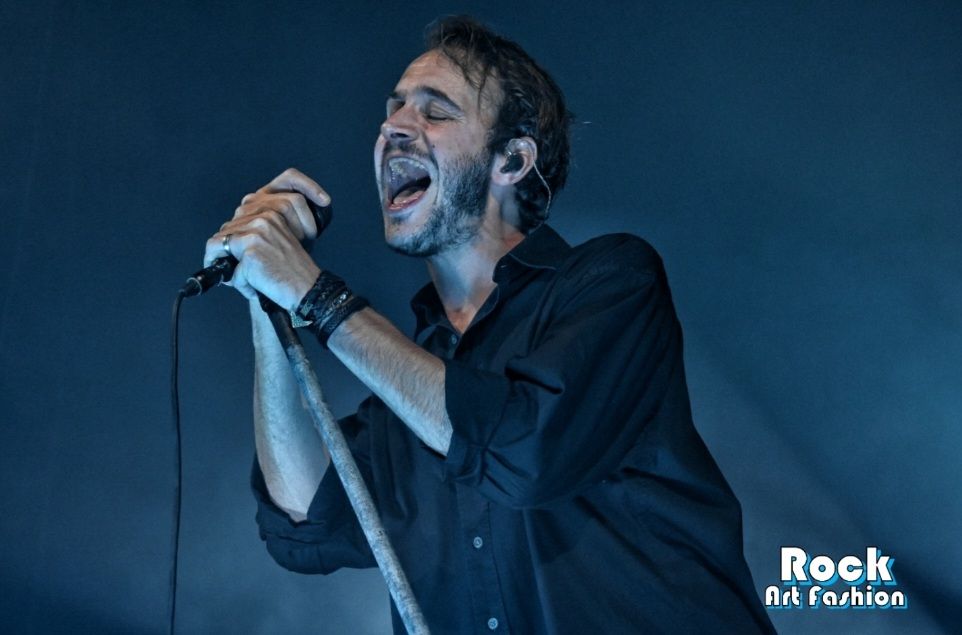
EDITORS travaille actuellement sur le huitième album. Tu pourras me donner quelques détails ? Des petits secrets ? Avez-vous déjà une date de sortie ?
Tom (rires) : Nous avons passé tout l’été ensemble dans un studio pas très loin d’ici et c’était vraiment productif. On a fait du très bon travail.
L’album n’est pas fini, j’en ai bien peur, mais il n’est pas loin d’être. J’espère que les gens entendront du nouveau matériel l’année prochaine, peut-être pas l’album en entier, mais peut-être une chanson et l’album va arriver peu de temps après. Nous sommes cinq et c’est le son d’un groupe.
Les trois derniers albums d’Editors, In Dream, Violence et EBM, je les vois un peu comme une trilogie. Je vois ces trois disques reliés d’une façon assez similaire.
C’était comme si nous utilisions le studio pour façonner les chansons, en nous appuyant sur les ordinateurs et les synthétiseurs comme outils d’écriture pour développer nos idées.
Avec ce nouvel album, nous voulions essayer de faire les choses autrement, c’est-à-dire dans une salle de répétition avec tout le groupe et travailler les chansons ensemble pendant une longue période. Et on n’appuie pas sur enregistrer tant qu’on ne sait pas où on va.
Alors que sur ces trois albums précédents, on a appuyé sur enregistrer au début et on est allé au fur et à mesure. C’est assez surprenant et cool mais pour ce nouvel album, on s’est dit : faisons ça autrement.
Cela signifie donc que cette fois les enregistrements ressemblent un peu plus à un groupe qu’à un groupe électronique.
Donc oui, c’est excitant. J’ai hâte que les gens l’entendent.
Les chansons d’Editors ou celles de l’album solo de Tom Smith sont très cinématographiques. Avez-vous déjà pensé à écrire une bande originale pour un film ?
Tom : Je pense que le groupe pourrait faire quelque chose de brillant pour un film si on a la bonne opportunité. Je pense à quelque chose avec très peu de voix. On pourra faire un très bon album instrumental.
On sera ravis de le faire et évidemment, il faut réagir à certaines opportunités qui se présentent, mais on ne sait jamais si on trouve la bonne personne, le bon projet.
Quel genre de film tu penses que cela pourrait être ?
Tom : Ça dépendrait. Honnêtement, je pense qu’on pourrait faire quelque chose qui porte un poids émotionnel, tu vois ? On pourrait faire quelque chose de terre-à-terre mais aussi quelque chose de science-fiction aussi.
Il faut qu’il y ait un certain conflit émotionnel et une certaine lourdeur qui corresponde à l’ambiance de la musique que nous faisons.
Quel est ton plus grand souhait pour 2026 ?
Tom : Ce serait bien que les gens soient un peu moins divisés, un peu plus tolérants les uns envers les autres et un peu moins en colère.
Merci beaucoup Tom
Tom : Merci à toi.
There is Nothing in the Dark That isn’t there in the Light. (PIAS)
Track Listing
Deep Dive
How Many Times
Endings Are Breaking My Heart
Life Is For Living
Broken Time
Lights Of New-York City
Lost Soul
Nothern Line
Leave
Saturday

english version
For more than twenty years, Tom Smith has embodied the dark, intense and magnetic voice of EDITORS.On December 5, 2025, the musician took a new step in his career by unveiling his first solo album, There is Nothing in the Dark That isn’t there in the Light.
A deeply intimate work, where shadow dialogues with light and where each melody, stripped down and sincere, evokes both the sweetness of memories and the strength of raw emotions.
Driven by the desire to rediscover the acoustic simplicity of his early days as a songwriter, he ventures here into more personal territory. Through ten magnificent songs carried by an acoustic guitar or a piano, he explores nostalgia, reminiscences and raw emotions, offering a sincere and moving look at his artistic and human journey.
Shortly before the release of the album, I had the pleasure of talking with Tom, via Zoom, to talk about the genesis of this singular project, his creative process, the inspirations that guided him towards this new musical adventure. We also had the opportunity to talk about his first steps in music, as well as the new EDITORS album currently in preparation. Meet a complete and profoundly human artist.
Do not forget to listen to this superb record and come see him in concert in Paris, at the Alhambra, on April 10, 2026. He will be touring Europe next year).
Hi, Tom. The release of your first solo album is approaching. How are you?
Tom : I’m really good, thank you. I am a little bit apprehensive, excited, but busy. It’s a strange feeling, but it’s a nice feeling. It’s a warm feeling.
When did you have this idea of doing a solo album?
Tom: It’s something I’d thought about for quite a long time. Certainly, you know, off and on for maybe 10 years.
But I reached the point after the last EDITORS’s album. I was thinking I could do different collaborations.
It felt a little bit like now or never. I felt like if I didn’t do it at this point in my life, I wasn’t sure I was ever going to do it, really. And I also felt like the songs that I was writing at the time felt quite personal. They felt quite honest. And they felt quite suitable for a solo record.
So, yeah, a little bit of thinking, well, time’s running out for me to do this. I don’t mean that’s overdramatically but if I don’t do it now, I’ll roll into another Editor’s record, perhaps to another Smith & Burrows record, and I’ll be 50 before I get back around to doing this, if I ever do it.
So it was the right time now…
Tom : Well, it’s not really a matter of right or wrong, is it? You know, you follow your instinct, and you follow where your inspiration is, and you make the decisions based on that.
“There is nothing in the dark that isn’t there in the light”, this title is magical. How this title came to you?
Tom: The lyric came to me when I was writing “Deep Dives” with Iain. It just came very quickly, and it worked in that song perfectly.
But as the album came together, and I started thinking about the album as a whole and thinking about the themes and things that I kind of kept coming back to, this lyric felt it connected quite a lot of the songs.
There is kind of a hope in this album, and there is a kind of a reassurance and a comfort to be found in some of these lyrics.
So, I went back to that lyric, and I thought that actually, that speaks to the whole album. Not just in that song, so it made sense to choose this title.
There is light and there is dark also, there is a lot of piano, a lot of acoustic guitars. How are these songs born?
Tom: I wanted to present my songs in a way closer to how I always write them. And whenever I’ve written a song for Editors or whoever over the last 20 years, it’s been me sat with an acoustic guitar or sat at the piano. And that’s how they’re born.
Obviously with the band, those ideas go on a journey, and they end up at a different destination quite often. But my feeling with my record is that I wanted the album to be really reflective of how the songs are when I write them. I wanted to be natural and to be quite sparse.
The idea was to present my work in a way that was closer to how it is when I write it. It felt quite natural, you know, and obvious.
We can feel that each song has its own story. New York seems to inspire you a lot. What is the relation that you have with this city?
Tom : New York does pop up a couple of times. Obviously, London is there, too. My thought process, or my inspiration was thinking about me as a younger person.
So, I was thinking about who I was when I went to those places for the first time, there were different chapters of my life, but it was quite an inspiring, exciting time.
And as much as those songs are about those places, they’re more about me at that time in my life, and maybe me with a different perspective and a different sense of wonder and awe, and that kind of excitement of youth.
Those songs are more me thinking back about that person and missing that youthful excitement and energy and that sense of wonder and pining for it a little bit.
I’ve been lucky with the band to visit lots of inspiring places in the world. New York for the first time as a young musician was inspiring of course, it’s not like any place I’ve ever been to before.
But, yeah, the song Lights of The New York City it’s more about me saying goodbye to youth, to a chapter of my life, as it is to be thinking about that place specifically.
Obviously, I wanted the song to be evocative and feel like it would suit that setting and the idea of having the trumpet player and soloing throughout the tune and the way the song feels melodically did strangely start to take on this New York feel.
You used to live in London and Northern Line seems to be about it. Do you have special memories?
Tom: I lived in London from my early mid-20s until about six, seven years ago. It was a good period of my life there. Obviously, in that song I was thinking about hanging out with Andy (Andy Burrows), who I made a couple of records with.
We lived in the same corner of London, and we both obviously were in bands that were going through exciting times, and we both bonded over the record we made together.
And when I talk about forming a band, I’m actually talking about Smith and Burrows in that song. But also, we went through similar things, like having children for the first time together. And I have very fond memories for that place and that person and that time.
I feel now as in a different part of my life. it’s a bit dramatic to say it feels like a different person, but I would fully acknowledge that that’s a younger version of me in a different chapter.
I found inspiration in looking back and being nostalgic about that.
If you have to choose only one song to represent this album, which one would it be?
Tom: My favourite song is Endings Are Breaking My Heart. There’s a completeness to the lyric that I enjoy.
The song is me listing things coming to an end, both trivial and also obviously more weighty, hinting at mortality, talking about one’s final breath, but at the same time talking about flowers dying on the tabletop or the last drink of an evening or a band leaving the stage.
I liked the concept of this listing of things, and I managed to find a way with that song that spoke to me. So, yeah, I’m really proud of that one.
In videos or pictures, you are often in the middle of nature. Do you feel communion with nature?
Tom : Yeah, I think so. I’ve just got back from walking the dog (laughing). I grew up in a rural part of England. And me and my family moved back to where I grew up, like I say, about five, six years ago.
So, I’ve definitely reconnected with greenery and outdoor life in the last five years or so, leaving the city, which is quite a natural thing. And lots of people do that.
I’ve just finished a little tour as well, which was part all around the UK, and it was really quite of an exploration. It was quite adventurous.
We did lots of really small towns, lots of remote parts of Scotland and Ireland and the country and corners that weren’t the major cities, really kind of small areas. And it was beautiful. And it did feel connected to the record.
Iain and I were constantly searching those describing words that feel connected to nature as well. We’d use adjectives like “woody” and “airy” when we’re trying to make recordings of guitars or vocals.
Yeah, perhaps as being a man of a certain age, I don’t know. I guess it is reflective of who I am right now, yeah.
And speaking about Iain, how did you meet him, and how did you decide to collaborate together?
Tom : I met Iain about 20 years ago. I met him when Editors were doing some shows with Snow Patrol and we were hanging out with that crowd. And we spent quite a lot of time with them, socially as well. We’re good friends with all of them. And Iain was part of that crowd, and him and his wife lived in a similar part, again, of North London, that we lived back there.
So socially, every now and then, we would see each other. And obviously, I’ve been aware over the years of his songwriting that he’d been involved with.
He’d been doing more production, and he made a record last year with Morgan Harper Jones and I loved the feeling of those recordings.
“I wanted the album to be really reflective of how the songs are when I write them. I wanted to be natural and to be quite sparse”. Tom Smith
His name came up in conversation with my manager and label when we were talking about people, I could spend time with to try and develop my album.
And obviously, because I had that friendship, acquaintance with him I was intrigued. But you never know until you get in a room with somebody if those things are going to work out.
So, we spent three days together as a trial, and the first thing we did was Deep Dive. It became the first song on the album that became a real important song in the gestation of the record.
I think we both understood very early on that, OK, there’s mileage in each other’s creativity, but you find this point where you overlap, right?
And it’s in that area of overlapping where we can do the work. And he’s a lovely man, and I really enjoy spending lots of time with him.
So, as you said, you have been touring UK and Ireland, and you sang the songs of the new album along with Editors song. How did you feel the response of the audience?
Tom: I played quite a lot of my album and, like you say, lots of Editors’ songs. It was magic. Obviously, people are interested and excited about the prospect of my record. But at the same time, it was a walk down memory lane for Editors fans and Editors songs as well.
I spent a lot of time with fans after the show, talking, selling t-shirts, and it was really got stuck in and met a lot of people.
There was a lot of people telling me how they’d been following the band for 20 years and what that had meant to them and which songs meant more to them and why. And telling me about things that have happened in their life and those moments when some of our songs have been part of that. It was quite emotional, really. It was quite full on. It was incredibly rewarding.
I enjoyed playing the new songs. It all felt they all fit together really well with the existing Editors’s songs, because, you know, they’re all songs that I’ve written, they’re all part of me, so it just felt like a Tom Smith kind of songbook.
Yeah, it’s good. I’m looking forward to doing it again. I’ll do some European dates next year in March and April, there’ll be a lot of European shows, including France and there will be small shows.
It’s funny because when you walk on stage with a band and obviously the shows are a little bit bigger and they’re louder, the stage is high and I’m wearing ear monitors and in some ways, you feel quite separated from the audience.
But for these shows, everybody sat down together and it’s so quiet. It’s awkwardly quiet. It’s just a completely different thing.
I started to really enjoy how awkward is the silence and then people had like nervous laughter.
I’m not really one for anecdotes or telling jokes or I’m not very good at public speaking at all. But I really enjoyed the two-way communication in that environment, because it’s completely different from anything I’ve ever been involved in as a performer.

What is your relationship with fashion. When you go on stage, do you think what you are going to wear or it’s not so important for you?
Tom: Yeah, I mean, over the years, I certainly think about it.
With every tour or maybe with cycle of the band, I tend to wear the same thing. If I find the thing I like, I’ll buy however many of them. So, I don’t have to decide about what to wear every night.
It seems to be simple. I like how straightforward that is, but yeah, I’m reluctantly interested in fashion. I feel deeply uncomfortable talking about it, but there’s a certain look and aesthetic that I’m drawn to, absolutely.
I would say, you have a minimalist style: t-shirts, shirts, leather jackets, all in black and white…
Tom: (Laughing) I would find myself under the minimalist, absolutely.
Let’s go back to the beginning. How did you get into the music? What was your major influence?
Tom: I was born in the early ’80s, so I spent my mid teenage years in the mid ’90s. I was interested in music, I played music at school. But then when I was about 13 – 14, Oasis came out and they were everywhere in England.
It wasn’t long after that, I picked up a guitar and tried to learn how to play those songs. And then I discover bands like Radiohead and REM, all about the similar age of 14 – 15. Then a little bit older, I was going to my first shows.
I lived near the Glastonbury Festival, so, Glastonbury 1997 was my first proper festival experience. I saw Radiohead that year and I realized that’s what I wanted to do, be on that stage.
I spent most of my time in my bedroom trying to write sad songs. I do the same thing now, to be honest, at the age of 44.
So, yeah, it was really that mid-90s era that kind of sparked me into picking up the guitar and trying to write songs and I’ve been doing it ever since.
When, I met the band at university, so I was a little bit older, and we bonded over those types of bands, but some other bands of early 2000s and we formed that kind of musical relationship with them that became, you know, Editors part one. And made the Back Room.
What difference do you see between writing a song 20 years ago and today? Has your approach changed?
Tom: I remember being a little bit quicker to start with, you know, I remember inspiration would come more like lightning and come out of nowhere. And things would arrive almost fully formed without too much thought or time. And now I find it, it doesn’t work like that. I need to have much more time.
It takes me longer. But also, I think perhaps the lyrics that I’m writing now, I’m trying to get to a point where they maybe mean a bit more like those lyrics to start with the first couple of albums, they just, I didn’t really think about it, they just kind of came. It wasn’t like thought and if you ask me what the songs are like about, many and many of them, I don’t really know.
That’s what made them brilliant, that kind of spontaneity, explosion of creativity made that whole time so exciting and you can extend that to the band’s career in general at that point.
And I think it’s impossible to maintain that. I’ve got older and I’ve continued to write songs; in some ways it’s got a little deeper process.
And in some ways, it’s more difficult, but I still love it. it’s perhaps it’s more rewarding when I finally get there. But I don’t think it’s uncommon to slow down with age though, right?
In a world where music is increasingly based on new technologies and AI, what do you think of these creations produced by software or robots?
Tom: I don’t really know. I’m a little bit ignorant to it all, to be honest. I would hesitate to offer a huge opinion on it because I’m just a guy that doesn’t know what he’s talking about.
And I can just be another guy in a band moaning about AI, and that’s pretty boring. It doesn’t affect my life directly.
I think about younger bands, and I think about music creation for younger artists, and I would I have concerns about that, you know.
Certainly, the way the musical landscape has shifted, and you see less and less bands being able to afford to spend the time and working on their career like, take step by step up the ladder and get to the point where they have to launch a career. I think that’s harder for them, but that’s a slightly separate issue to the kind of AI thing.
People that come to our shows and hopefully my shows are wanting to get a connection, a human connection, and feel something provoked inside them that comes from another human being.
What do you listen in this moment?
Tom: I just discovered this artist called Steven Wilson Jr. He’s a country singer. It’s quite epic and it’s kind of amazing. I think he was a boxer for a bit and then a songwriter and now he’s a solo artist.
He sounds like a rock singer from the 90s. There’s kind of gritty, earthy story behind him. I’ve been transfixed by him for the last few days.
I really like Adrianne Lenker and her solo record songs. I love Big Thief as well, her band.
Like everybody else now, I’m listening to Bruce Springsteen because he’s got a film out (Springsteen: Deliver Me from Nowhere)
I saw him in the summer, and it was just overwhelmingly emotional. It was quite something.
It was in Anfield, the Liverpool stadium, which is quite emotional. It’s the stadium in the Premier League, which is renowned for being a cauldron of emotion.
You know, it’s the hardest place to go and play because of the fans and the atmosphere that’s created in this stadium.
And it’s an emotional city and they’re emotional people and the stadium is concept seeped in that. To see Bruce Springsteen in that environment was awesome.
And what do you love to do except to music? I saw a picture of you with Max Verstappen on Instagram. Are you a fan of Formula One?
Tom: (Laughing) My youngest son has got me into Formula One over the last couple of years. So, I am now actually quite interested, and I do enjoy that. We were lucky enough to go to the Belgium Grand Prix, and yeah, I did meet Max. It was awesome.
I like football. I follow Arsenal, so on the weekend, I hope they win.
I’m trying to raise my children to be good young men, and for the most part, they are, they’re better than me. And I like to walk my dog and write songs, you know, that’s me really!
You are working with Editors on the eighth album. Can you tell me some secrets, some details? Do you have a release date already?
Tom (laughing): We spend the whole summer together in a studio not too far from here and it was really productive. We got a lot of really good work done.
The album isn’t finished, I’m afraid, but it’s not far off. I really hope that people might hear some new material next year, maybe not the whole album, but maybe a song next year with obviously the album coming not too long after that. It’s the five of us. It’s the sound of a band.
The last three Editor’s albums, In Dream, Violence, and EBM, I see them as a threesome there, like us really using the studio to develop the songs, using computers and synthesizers to develop our ideas as a tool of the writing. I see those three records connected quite similarly like that.
With this new record, we wanted to try to do things the other way, which is in a rehearsal room with the songs for an extended period of time. And you don’t press record until you know-how it’s going to go, right?
On those previous three records, you press record at the beginning, you kind of work it out as you go, and that’s kind of surprising and cool but with this one, we said : let’s do it the other way.
Let’s get the band in the room to be at a place with the material that we know what we’re doing before we press record. So that means that the recordings do feel a bit more like a band than an electronic band.
So yeah, it’s exciting. I can’t wait for people to hear it, hopefully some of it next year.
Editors’ songs or Tom Smith’s solo album are very cinematic. Have you ever thought to write a soundtrack for a movie?
Tom : I think the band could do something brilliant for a film with the right opportunity. I think, perhaps with very little vocals. Certainly, we can make a really good instrumental album.
We would love to, obviously you need to react to certain opportunities that come through, but you never know, with the right person, the right project.
Because like you say, we’re so at home exploring drama and, yeah not being too subtle. And sometimes those things can work really well in that sphere with the right project.
What kind of film do you think it could be?
Tom : It would depend. I honestly think we could do something where there’d have to be a weight, like an emotional weight.
I think we could do something that felt earthy and natural, as well as something kind of sci-fi as well. I honestly think we could do both. There need to be some kind of emotional conflict and weightiness to it that would suit the mood of what we do.
As the new year is approaching what would your biggest wish for 2026?
Tom : It would be nice for people to be a little bit less divided, to be a little bit more tolerant of one another, and to be a little less angry.
Thank you very much Tom
Tom: Merci
There is Nothing in the Dark That isn’t there in the Light. (PIAS)
Track Listing
Deep Dive
How Many Times
Endings Are Breaking My Heart
Life Is For Living
Broken Time
Lights Of New-York City
Lost Soul
Nothern Line
Leave
Saturday
 Rock Art Fashion
You must be logged in to post a comment.